
 Download

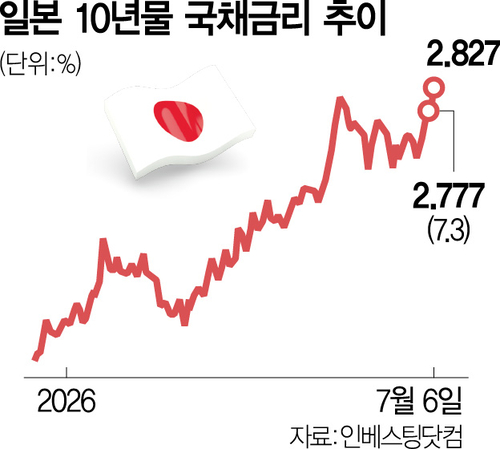

Foreign media reported that the launch of Nvidia’s next-generation artificial intelligence (AI) server product has been delayed by more than a year due to manufacturing difficulties. As a result, related stocks across Asian markets fell sharply, while Japan’s 10-year government bond yield hit its highest level in 30 years, adding to unease in financial markets.
According to U.S. business network CNBC on Thursday, a semiconductor analysis firm reported in a recent report that the launch of the “Kyber NVL144” rack-scale architecture, which was set to feature Nvidia’s Rubin Ultra chips starting next year, has been pushed back by more than 12 months to 2028. Kyber is an AI server system designed to combine 144 high-performance Nvidia chips into a single unit that operates like a giant computer.
SemiAnalysis noted that a manufacturing problem with the multilayer printed circuit board (PCB), a core component of the system, led to the launch delay. The reason is that current technology makes it difficult to mass-produce the component, a special PCB that densely connects signals between chips and parts. The multilayer PCB serves as the brain essential for AI companies to train and run cutting-edge models.
As the news spread, Asian market stocks including Japanese PCB maker Ibiden, which counts Nvidia as its largest customer, and Hong Kong’s Kingboard Laminates Holdings fell more than 10% intraday. Bloomberg analyzed that “the prospect of a delay in the Kyber NVL144 launch and other content in the post are heightening uncertainty over Nvidia’s next-generation roadmap.”
Meanwhile, the yield on Japan’s 10-year government bond, a benchmark for long-term interest rates, hit its highest level in 30 years on Friday, rattling Asian financial markets. Concerns are mounting after the government of Japanese Prime Minister Takaichi Sanae signaled an expansionary fiscal policy of 10 trillion yen (about 9.451 trillion won) annually.
Japan’s 10-year government bond yield surged to as high as 2.830% intraday that day, marking its highest level in about 30 years since October 1996. It broke the previous record set just three days earlier, on the 3rd of this month, when it had risen to 2.810% intraday — also the highest in 30 years.
Analysts say that the expansionary fiscal policy formalized by the Japanese government late last month, the so-called “Honebuto” plan, led to a spike in yields driven by large-scale government bond selling. The original Honebuto proposal removed the reference to “fiscal consolidation” that had been included in the government’s fiscal management principles through last year. It also set fiscal spending at 10 trillion yen annually starting next year. The “Honebuto shock” is also putting downward pressure on the value of the yen. In the Tokyo foreign exchange market that day, the yen-dollar exchange rate rose to above the 162 yen level intraday. It approached the lowest level recorded in 40 years since the Plaza Accord (December 1986), which was reached late last month.