
 Download

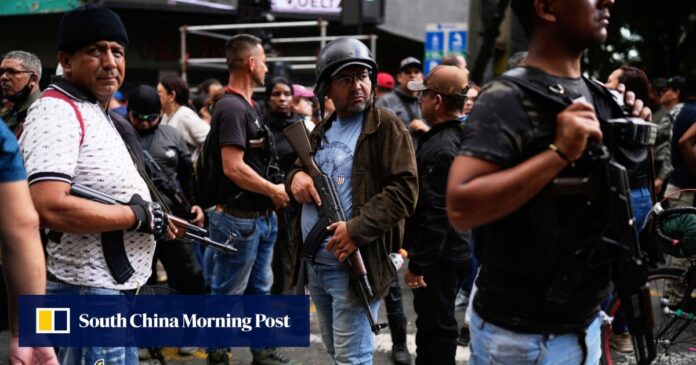

Chinese companies operating in Latin America are bracing for greater uncertainty rather than abrupt rupture, as Washington moves to reassert dominance in the western hemisphere following the ousting of Venezuelan President Nicolas Maduro, according to analysts.
This sense of caution comes amid intensifying US efforts to curb China’s footprint in strategic resources, infrastructure and trade across the region.
“There is little doubt that a Trump-style Monroe Doctrine is aimed squarely at countering China’s growing influence [in Latin America],” said Wang Yiwei, director of the Institute of International Affairs at Renmin University, referring to a revived interpretation of the foreign policy that seeks to reassert US dominance in the western hemisphere by curbing the influence of rival powers, particularly China.
Wang added that Washington is pursuing a calibrated, low-intensity strategy to limit China’s influence in Latin America by tightening control over strategic minerals, shipping lanes and port infrastructure in countries such as Venezuela, both directly and through corporate proxies, “in a clear effort to dilute China’s influence and weaken the Belt and Road Initiative”.
China’s footprint in Central and South America has grown markedly in recent years, driven by investments in energy, ports and strategic minerals. This trend has increasingly put Beijing on a collision course with Washington’s efforts to reestablish an undisputed influence over regional affairs.
“American dominance in the western hemisphere will never be questioned again,” US President Donald Trump said at a press conference following Maduro’s overthrow, echoing the Monroe Doctrine – an assertion of Washington’s authority over its southern neighbours dating to 1823.