
 Download

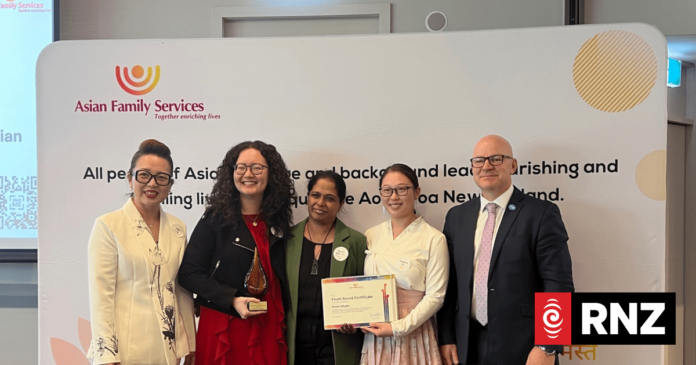

More than 200 health professionals, researchers and community leaders attended the event.
Photo: RNZ / Liu Chen
Multiple organisations and individuals have been recognised at an award ceremony for their contribution to Asian health and wellbeing.
The recognition was part of the inaugural Flourishing Asian Communities and Workforce Symposium hosted by the Asian Family Services in Auckland on Friday.
More than 200 health professionals, researchers, educators, funders, community leaders and policymakers from across the country attended the event.
The awards celebrated excellence across five categories, including clinical, public health, youth, lived experience and peer support, as well as research, with two winners for each category.
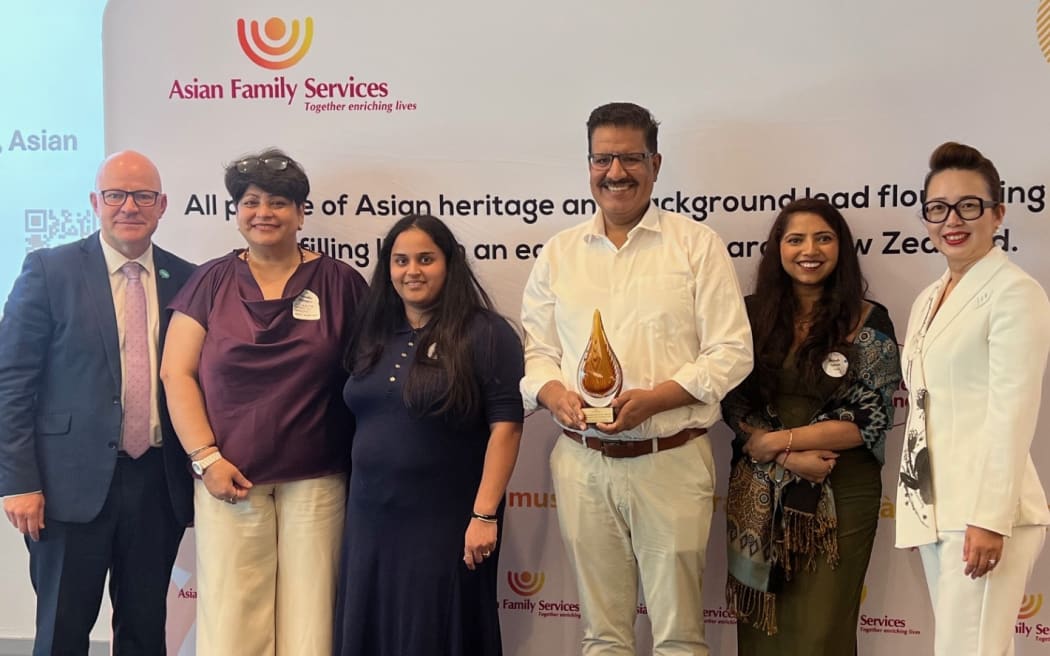
The team from Muskaan Care Trust with Mental Health Minister Matt Doocey (left) and Asian Family Services chief executive Kelly Feng (right). Muskaan Care Trust’s chairperson, Vivek Vij, holds the trophy.
Photo: RNZ / Liu Chen
Muskaan Care Trust was one of the winners for the lived experience and peer support category with its initiative supporting people from the ethnic communities living with genetic blood disorders, such as thalassaemia and sickle cell anaemia.
The organisation’s chairperson, Vivek Vij, said that it was “humbling” to be recognised.
A lack of awareness, funding and government support were among the challenges faced in this sector, and his organisation hoped to increase people’s knowledge about the disorders to better support affected families.
“[Thalassaemia] is prevalent within lots of Asian African countries in some of the European nations as well,” Vij said.
“For us, it’s not the ethnicity that matters. It is the people who are there with this disorder.”
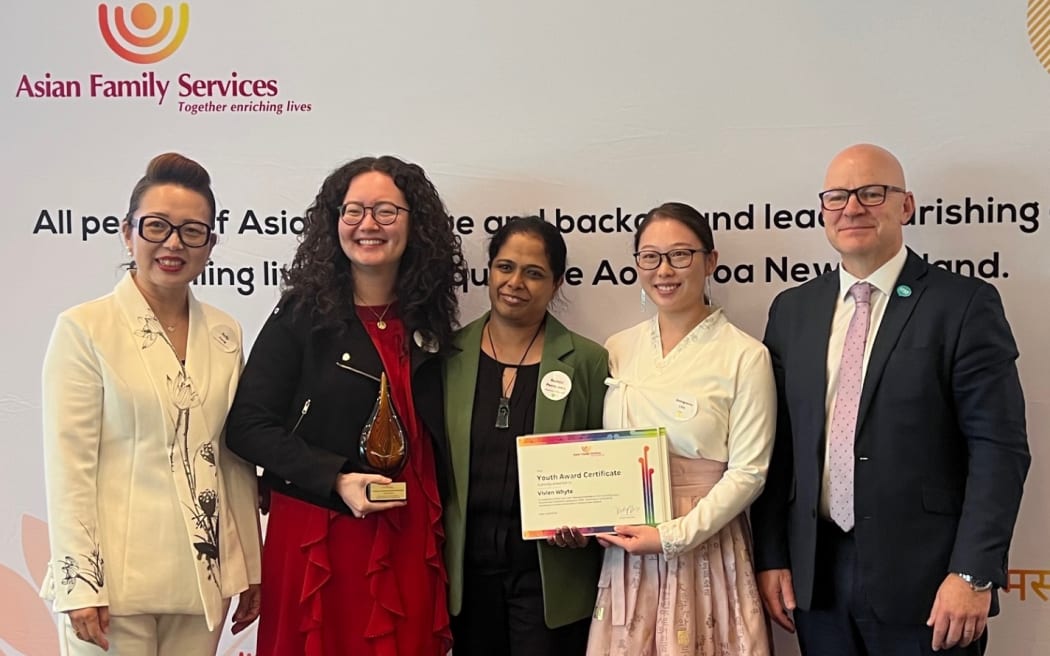
The Thriving at Crossroads team with Kelly Feng and Matt Doocey. Michelle Delves is second from the left.
Photo: RNZ / Liu Chen
Taking home the Youth Award was Asian youth initiative Thriving at Crossroads, which “amplified youth voices, influenced national policy, strengthened culturally responsive support for Asian children and youth”, according to the award citation.
Michelle Delves from the group, who is half British and half Taiwanese, found it difficult to navigate society as a mixed-heritage person.
“Hopefully, here will be more practitioners that can relate to those kind of mixed upbringings and to all those people that might be struggling a little bit,” Delves said.
“I like to think that everyone is doing their own part, and whatever I’ve been doing is kind of making the world a better place for the future.”
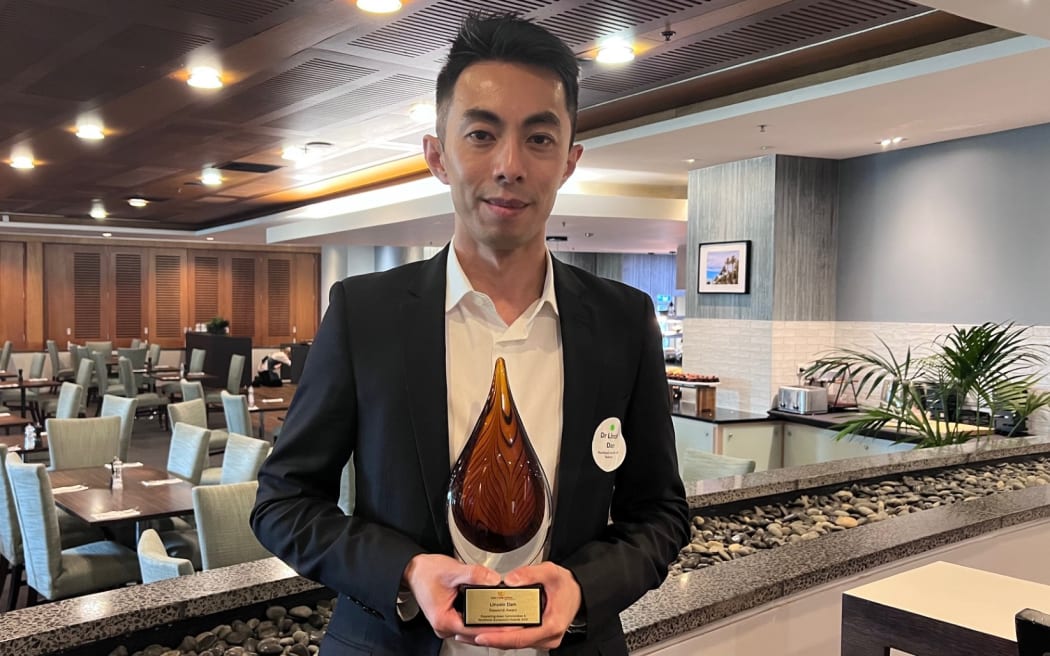
Dr Lincoln Dam from the Auckland University of Technology
Photo: RNZ / Liu Chen
Lincoln Dam, who has Cambodian Thai descent, received a research award for his work as a researcher on Asian identities and their relationships with Māori and the Treaty of Waitangi.
“I’m really interested in that relationship between Asian and Māori communities, particularly because very soon Asian communities will outnumber Māori here in Aotearoa demographically,” he said.
“What I’m interested in is how do we relate to one another? What are our relationships to one another? And actually how might our well-being be tied up with the well-being of Māori people as well.”
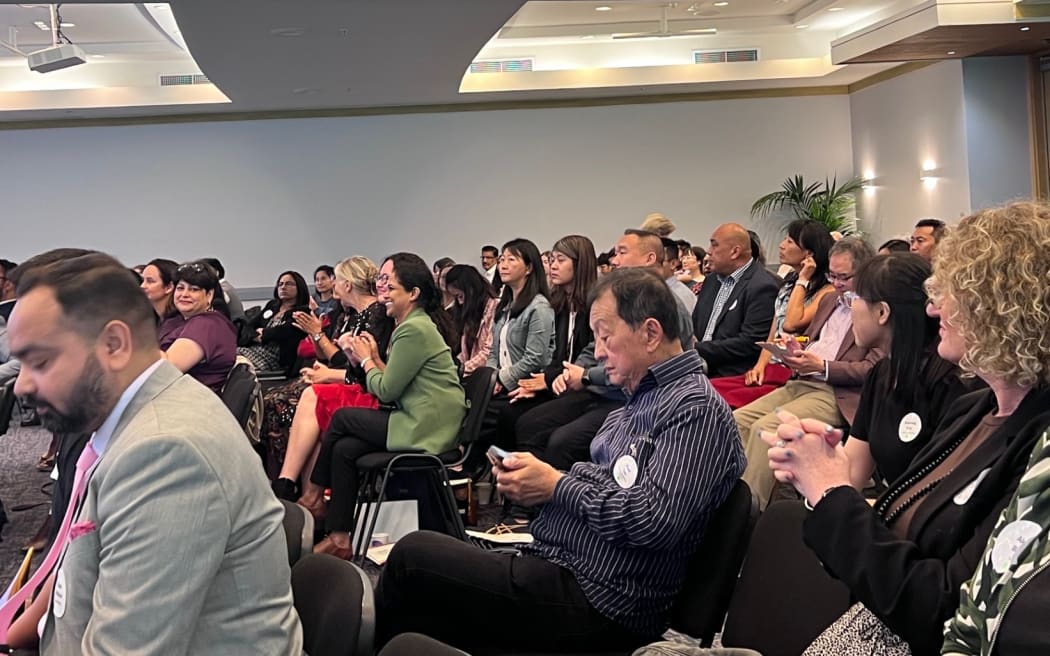
Attendees at the inaugural Flourishing Asian Communities and Workforce Symposium.
Photo: RNZ / Liu Chen
Other winners included mental health worker Jannine Nock, who received the clinical award for developing the first South Asian children’s mental health storybook series in New Zealand.
The Asian Health and Wellbeing Community Network, under Health New Zealand, also won a clinical award, which supports clinicians in delivering culturally responsive mental health and addiction care.
Ronald Tuano won the lived experience and peer support category for providing support to construction sites’ first Tagalog suicide prevention and mental health training.
The New Zealand Chinese Association won a youth award for programmes that strengthened young Chinese New Zealanders’ identity and enhanced Māori-Chinese relationships.
Asian Academics in Aotearoa Association won a research award as it connected Asian academics, students, ethnic leaders and NGOs at a symposium that also addressed under-representation and pay in equities.
Hato Hone St John’s 3-Steps for Life programme was awarded in the public health category for providing culturally inclusive emergency response training for Asian communities.
The other winner for the public health award was Ramil Adhikari, founder for the Asian and Ethnic Network within the National Public Health Service, which connects migrants and ethnic workers to share experiences, build voice and strengthen workforce cultural confidence.
The symposium also marked the launch of a new online resource centre with learning modules focused on gambling harm and suicide prevention in partnership with PGF Services and Pacific provider Mapu Maia.
The modules aim to equip practitioners with culturally relevant knowledge and practical tools to respond to critical issues facing Asian communities, as well as the broader gambling harm experienced across Māori, Pacific, Asian communities and young people.
More resources would be added to the platform later, Asian Family Services said.
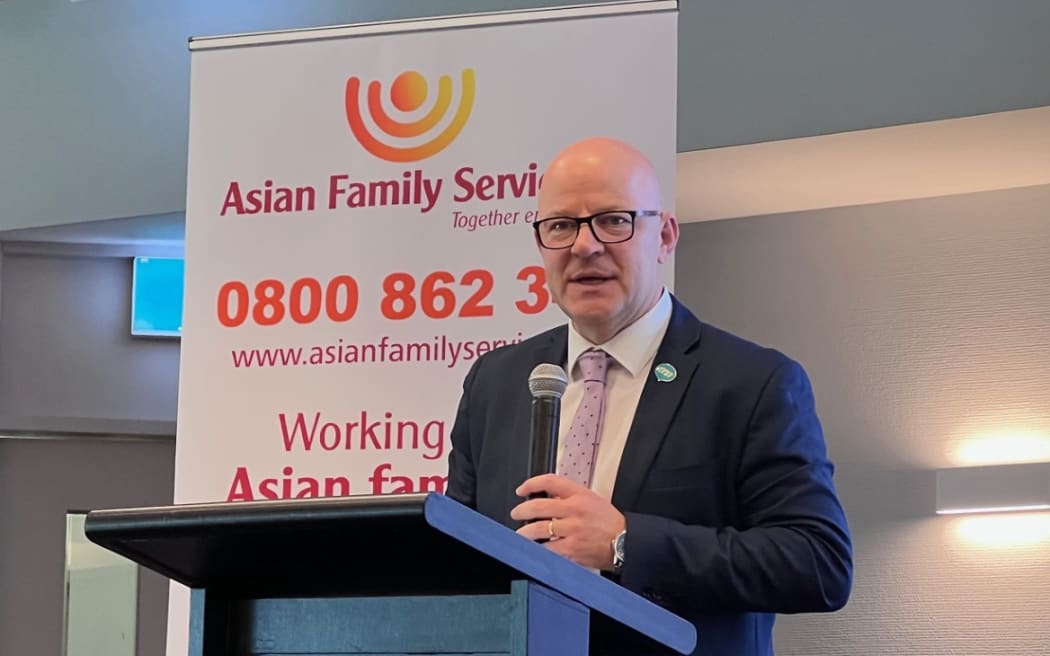
Mental Health Minister Matt Doocey
Photo: RNZ / Liu Chen
Mental Health Minister Matt Doocey said it was a privilege to present the awards and hear people’s stories.
“What we do know in New Zealand is that people tell me it just takes too long to get the support they need. Quite often, a reason they can’t get the support they need is too many workforce vacancies,” Doocey said.
“Today with the first mental health Asian workforce symposium, it’s a great opportunity to understand the barriers to get more of our Asian community putting their hand up to come and work in the field.”
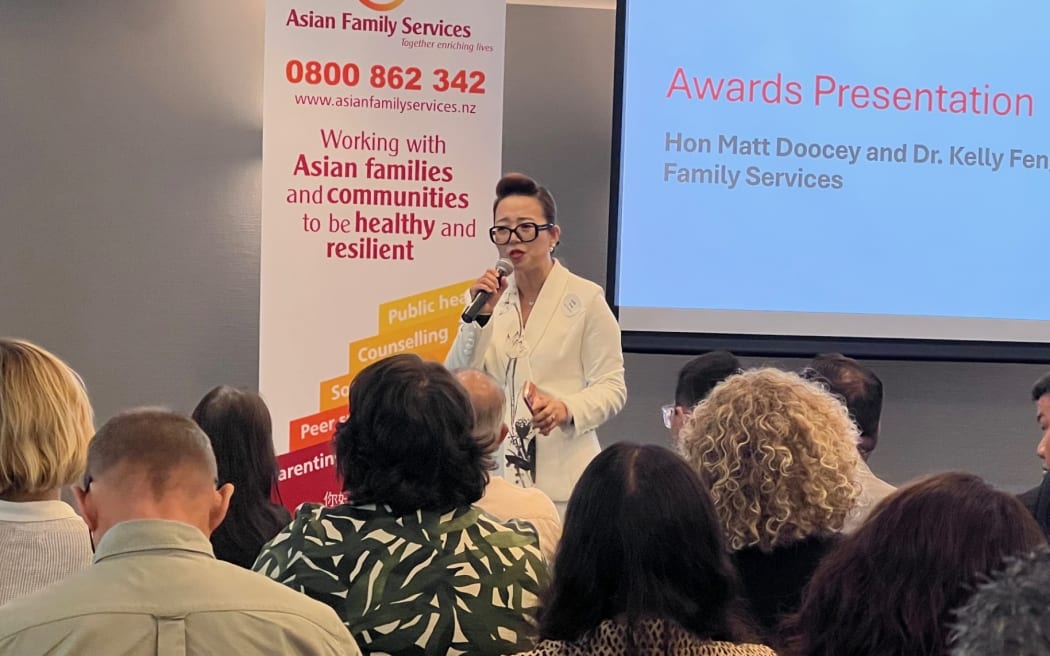
Kelly Feng from the Asian Family Services at the inaugural Flourishing Asian Communities and Workforce Symposium.
Photo: RNZ / Liu Chen
Asian Family Services chief executive Kelly Feng said it was essential to recognise people who had worked tirelessly in the community.
“A flourishing Asian community is not just a vision – it is our collective mission,” Feng said. “We are honoured to bring together passionate professionals who are committed to delivering the best care and driving real change.
“The minister also recognises the growing Asian population and the gap and the support we need as a community.
“[It’s] not just talking about the invisible but also becoming visible [and] having resource support for our community [and] for our workforce. That’s very important.”