
 Download

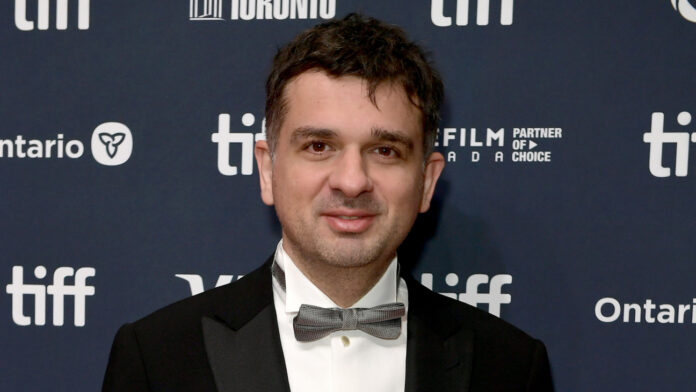

The Chinese entertainment industry has been out in force across Filmart this week, with major companies such as CMC Pictures and the various provincial governments including the sprawling metropolis of Shanghai looking to pitch their locations to the film world.
About two decades ago, French film editor Matthieu Laclau was going in the opposite direction. Laclau, fresh from film school in Paris and looking for work, was told by one veteran cinematographer that he had “no chance to work in the film industry” so he decided to expand his horizons and head east.
As luck would have it, the move to Beijing was quickly followed by a call, virtually out of the blue, to come work with auteur Jia Zhangke on what would become A Touch of Sin (2013), winner of Cannes’ best screenplay award. “He was a hero of mine so of course I said yes, instantly,” Laclau says.
In the years since, the prolific Laclau has worked with a veritable who’s who of the Chinese-language arthouse scene, including Zihan Geng, Wei Shujun, Kok Rui Lau, Shangjun Cai, Xue Bai, Yang Zhang and Midi Z. His work, as well as his position as one of the few foreigners to successfully integrate and enjoy a long successful career in the Chinese film industry, has given him a unique insight into how the market for these smaller productions has developed.
This past week saw the Taiwan-based filmmaker travel to Hong Kong for the Asian Film Awards where he gave a talk with fellow editor David Richardson (Drug War) about his work. On the eve of Filmart, The Hollywood Reporter spoke to Laclau about his life in China and the state of the industry in the world’s second biggest movie market.
You’re closing in on 20 years in Asia. What are some of the changes you’ve seen, especially in Chinese-language cinema?
It’s very fascinating when you go to China, you talk with these directors or producers and they keep saying, ‘Oh, it’s changing so fast. It’s changing so fast. Always changing.’ And it’s true the audience is changing, maybe the taste is changing. But for me, as an editor, honestly, making a film is still the same process. I think it’s still a bit the same process as it was 100 years ago, just that there is maybe more technology involved. But technology is just a tool. The process of telling the story, finding the film language of the film, caring about the characters, understanding the characters — when it comes to those things there is not a lot of change.
AI is a huge topic at this year’s Filmart. What’s your take on its rise?
Well I’m sure with filmmaking that AI will be very smart when it comes to understanding or telling you what’s missing, in providing basic information. It’s so convenient, of course. I’m sure it will be convenient for me because in five minutes I can get an answer. I don’t need to ask someone to come here and watch my work for two hours and then maybe this person has only one person’s point of view, or might miss something. So I’m sure that it can be a useful tool. But the danger is now you’re going to start to ask things like ‘When do you think that the audience is going to cry?’ or ‘When is in this film will the audience become emotional?’ And if filmmakers start changing things on that advice, then we start heading into dangerous territory.
How “global” has the making of movies become and are there opportunities in Asia, as there were when you first arrived?
I think the rise in co-productions is making some impact and that this is a good thing. In Europe, you know, it has always been like this for many, many years — you do a European co-production with Germany, with Belgium, with the Netherlands, with whatever countries. They combine the story together and everyone can find their own money and then they can reach their own market. So you can have a bigger budget to make the same film. I think this is happening a lot more in Asia now. Some of the director’s I work with are following that path, and I think that’s good. In China we are seeing more of a mix of genres, and again that is good. Genre filmmaking has developed, films that are sometimes dark but include heartfelt humor, and maybe even the director’s view of the world. So there are definitely things to get excited about.