
 Download

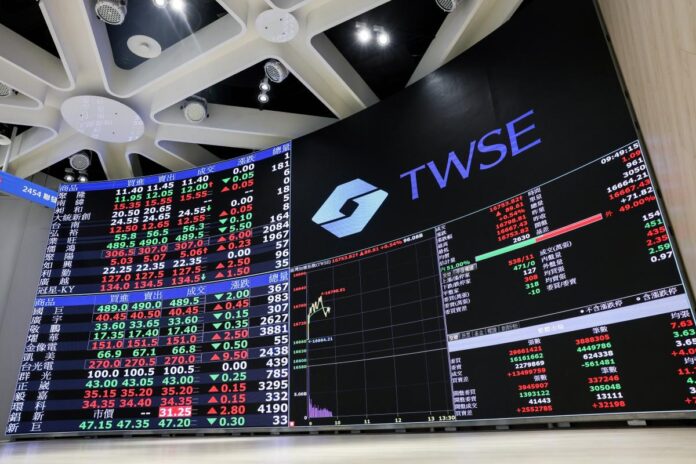

BENGALURU (March 18): Emerging Asian stocks climbed on Wednesday, supported by sharp gains in South Korea and Taiwan, as oil prices took a breather after recent advances and investors turned their focus to the US Federal Reserve’s (Fed) policy decision.
Stocks in Seoul rose as much as 4% to their highest since March 3, while those in Taiwan added 1.7% to a more than two-week high. The strength in the two heavyweight tech markets helped lift the regional MSCI EM Asia index by 1.6%.
Equities in Singapore, Malaysia and Thailand advanced about 1% each, pushing the MSCI Asean index up 1% to an eight-session high.
“Investors appear to be returning to artificial intelligence (AI) and semiconductor names, particularly in Taiwan, where earnings visibility remains strong,” Song Zhe, a senior Asia and global emerging market equities investment specialist at BNP Paribas Asset Management, said.
“Singapore also benefits from its defensive, liquid market profile.”
Expectations of fresh policy support ahead of President Lee Jae Myung’s meeting with analysts, listed company officials and institutional investors to discuss ways to improve the country’s stock market pushed South Korea’s Kospi higher.
“Korea’s reform push is equity-positive and a major long-term theme for the market. Yet, in the short-term, it does little to protect against a prolonged geopolitical shock,” Zhe said.
“Global markets, including Asia, look more complacent than convinced. AI and reform stories are helping sentiment, but neither fully insulates the region from a prolonged war.”
Meanwhile, investor focus is squarely turned to the Fed, which is due to announce its policy decision later in the day. Markets will watch how policymakers weigh growth risks against inflation pressures stemming from the escalating Iran war.
“Markets look for a prolonged pause and easing cycle to continue into next year and, if that were the case, Fed monetary policy would be in divergence versus most of the Group of 10 [countries] starting their hiking cycle,” analysts at Maybank wrote.
Among currencies, the ringgit rose as much as 0.3% to 3.9080 a dollar, its strongest since March 2. The currency, one of the strongest in emerging Asia, hovered near a five-year high against the Singapore dollar.
The Philippine peso firmed to 59.536 against the US dollar, recovering from the record low of 60 hit on Monday.
The Philippines’ finance secretary told Bloomberg Television on Tuesday that the central bank may have to tighten policy next month if oil prices keep rising due to the war.
Markets in Indonesia were closed for a local holiday.
Highlights:
- Asian demand powered Japan’s exports for the sixth month as Iran war risks grew
- Indonesia’s central bank clarified the new rule on foreign currency transactions
- Manila said China had said it will not restrict fertiliser exports to the Philippines
- The Iran war is not delaying US weapons shipments to Taiwan, officials said