 Download

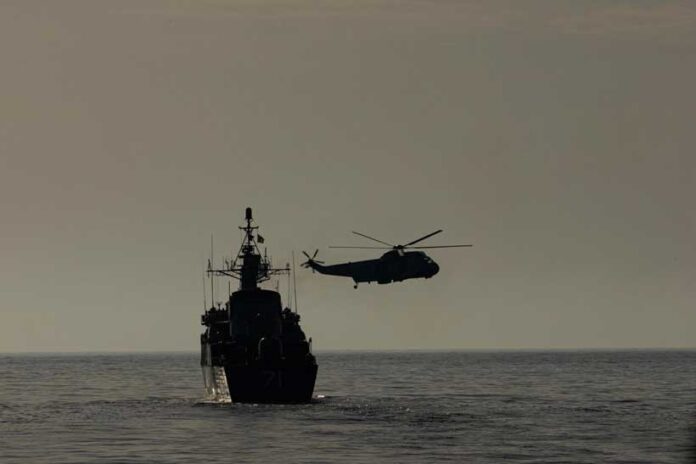

China categorically rejects the joint US-Israeli military threats of a potential strike against Iran. Current Chinese support for Iran (as of early 2026) revolves around three main avenues: First, military and security support, including joint military exercises between China, Iran, and Russia. A major naval exercise involving China, Russia, and Iran is scheduled for February 2026 in the Gulf of Oman, reflecting increasing field coordination. Second, China provides cybersecurity and intelligence support to Iran. In January 2026, China began implementing a strategy to replace Western technologies in Iran with secure, closed Chinese systems that are difficult to penetrate, aiming to bolster Iranian “digital sovereignty” and counter cyberattacks. Third, China is involved in rebuilding Iran’s military deterrent systems. Reports indicate Chinese assistance to Iran in rebuilding its missile and air defense capabilities following the military tensions of 2025.
The text abruptly ends here, so the translation stops as well. The second avenue of Chinese support for Iran lies in the economic partnership between the two countries, spearheaded by the 25-year strategic partnership agreement. This agreement, which both parties reaffirmed in late 2025, serves as the strategic framework and includes potential Chinese investments of up to $400 billion in the oil, gas, and infrastructure sectors in exchange for energy supplies at reduced prices. Furthermore, Iran’s oil trade with China is significant, with China being the primary buyer of Iranian oil, importing over 80% of Iran’s oil exports through unofficial channels that circumvent sanctions.
The third avenue of Chinese support for Iran is political and diplomatic backing, provided through international organizations. China also offers diplomatic cover to Iran through its membership in the Shanghai Cooperation Organisation (SCO) and the BRICS group. China has consistently rejected the military option against Tehran in international forums and at all international levels. In January 2026, China’s Permanent Representative to the United Nations reiterated his country’s opposition to any military action against Iran, emphasizing support for Tehran’s national stability.
Accordingly, China adopted a firm diplomatic stance rejecting military escalation against Iran, while simultaneously providing political and economic support to bolster Tehran’s resilience against Western pressure. This stance was evident in recent developments in 2025 and 2026. China’s practical opposition to military strikes against Iran was demonstrated by its strong condemnation of potential US and Israeli attacks on Iran, describing them as a “flagrant violation” of the UN Charter and international law. Furthermore, China warned against targeting Iranian nuclear facilities. The Chinese Foreign Ministry explicitly condemned the US bombing of Iranian nuclear facilities, such as Fordow, Natanz, and Isfahan, warning that such actions would exacerbate tensions in the region. With Chinese Foreign Minister Wang Yi affirming his country’s support for Iran in “protecting its national sovereignty and defending its legitimate rights and interests ”.
The nature of Chinese assistance to Iran stems from the pressure exerted on it by the United States and Israel. This assistance takes the form of political and diplomatic support, with China leading efforts at the UN Security Council, in cooperation with Russia and Pakistan, to introduce resolutions calling for a ceasefire and condemning attacks on Iranian facilities. China also provides Iran with all forms of military-technical cooperation, in addition to intensifying military cooperation between the two countries, particularly in the field of surface-to-surface missile production. Beijing has helped Tehran rebuild its missile capabilities, which were damaged during previous confrontations. Furthermore, Beijing provides economic and security cover for Iran by offering “unwavering support” within international frameworks such as the Shanghai Cooperation Organisation, aiming to mitigate the effects of anticipated economic and military sanctions. China also continues to invest billions of dollars in the Iranian economy under a 25-year agreement in exchange for a steady supply of oil.
Therefore, China warned against any large-scale US military attack, asserting that “the world will not enjoy peace if the Middle East remains unstable.” China’s stance on US threats to strike Iran is characterized by strong opposition and warnings against “military adventurism,” while emphasizing diplomatic solutions to protect its strategic interests. The details of China’s position, as reported in January 2026, include official rejection of the US plan, warnings against chaos, and principled opposition to a large-scale US war plan against Tehran. China also warned the US at the UN Security Council that “military adventurism” in the Middle East would plunge the region into chaos. Beijing considers any US military attack a blatant violation of the UN Charter and international law and stresses the need to respect Iran’s sovereignty. The Chinese Foreign Ministry reiterated its opposition to the use of force or the threat of force and urged a halt to “destabilizing policies.”
Therefore, China’s military movements on the ground were aimed at providing necessary logistical support to Iran in the face of any potential US-Israeli military escalation. This support included China providing “technical and military” assistance; the dispatch of 16 Chinese People’s Liberation Army cargo planes to Iran via a rapid airlift in late January 2026, coinciding with the US military buildup, potentially indicating a desire to bolster Iranian defenses or provide logistical support; and the trilateral deterrence agreement, where China, Russia, and Iran recently signed a “trilateral strategic charter” encompassing joint naval exercises and intelligence sharing, thus increasing the cost of any unilateral military action against Tehran. Furthermore, China’s decision to contribute to the “military reconstruction of the Iranian army and its equipment” involved rebuilding Iran’s missile deterrent systems and supplying them with crucial components, such as solid rocket fuel and microprocessors, to counter US threats.
China’s primary strategic motivation for assisting its Iranian ally lies in preserving its Belt and Road Initiative and ensuring energy security. Iran is a major energy supplier and a key partner in China’s Belt and Road Initiative, and any war would severely jeopardize these Chinese investments and supplies. Furthermore, Beijing’s intelligence, military, defense, and security apparatuses are focused on the US preoccupation with Iran in the Middle East as a means to mitigate American escalation against China in its direct spheres of influence in Asia. Some Chinese military experts believe that China might secretly benefit from Washington’s involvement in a new war in the Middle East, as this would divert American attention from the Indo-Pacific region, which is close to China’s spheres of influence.
As for China’s practical stance in the event of an actual strike on Iran, based on Beijing’s reaction to previous attacks, such as the June 2025 strikes, its response is expected to be primarily diplomatic. This would involve issuing strong condemnations in international forums and demanding an immediate ceasefire. Practically, China would likely offer diplomatic channels (off-ramps) to de-escalate the conflict, avoiding direct military involvement and preferring the role of “peacemaker” in the region.
Here, the Chinese position regarding the threats and large-scale US strikes targeting government institutions and Revolutionary Guard facilities in Iran is characterized by a firm rejection of military escalation and a commitment to diplomacy, along with strong condemnation of any action that violates international law, according to the current data in January 2026. China strongly condemns any US strikes targeting Iranian facilities, describing them as a “military adventure” that would plunge the region into “an abyss of uncertainty” and widespread chaos. Beijing considers any attack on government institutions or Revolutionary Guard facilities a serious violation of the purposes of the UN Charter and Iran’s sovereignty. China consistently affirms its opposition to the use of force in international relations, emphasizing that “the use of force cannot solve problems.” Beijing opposes any external interference in Iran’s internal affairs, particularly in light of recent US threats linking them to internal unrest in Tehran, urging Washington to stop “pouring oil on the fire.”
On the other hand, the Chinese position calls for dialogue and diplomatic solutions as the only way to resolve crises, including the nuclear issue and Middle East tensions, urging all parties involved to exercise restraint and prevent “the escalation of the conflict.” While China generally adheres to diplomatic rhetoric and avoids direct military involvement, it continues to provide political and media support to the Iranian regime. Reports indicate ongoing technical and military cooperation to bolster Iran’s defense capabilities in the face of any potential escalation.
Therefore, we understand that China is positioning itself as a “voice of reason” in the face of what it calls American “political bullying,” warning that destabilizing Iran will harm the interests of the international community and global energy security.