
 Download

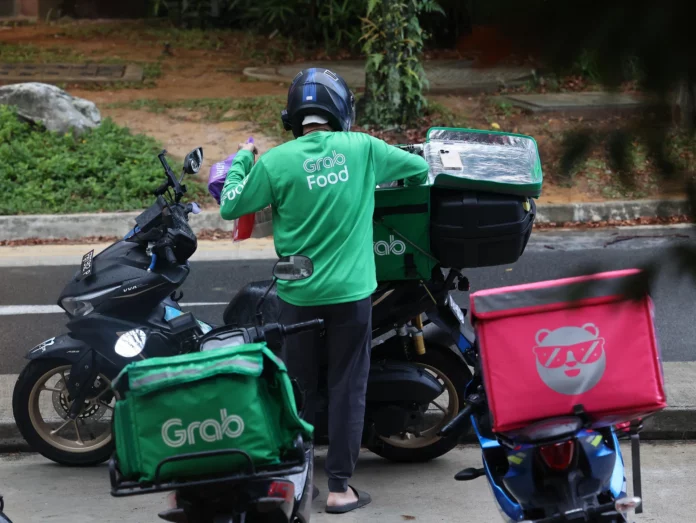

RISING oil prices triggered by the ongoing war in the Middle East could quickly drive up operating costs within South-east Asia’s tech industry.
Energy markets have surged since the closure of the Strait of Hormuz, a key shipping route for global oil supply. Some analysts warn that benchmark prices could continue to climb, raising the prospect of US$200 oil.
“The Middle East war is screwing logistics hard in South-east Asia,” says Philippe Auberger, co-founder of Indonesia-based consulting firm One Logistics Solutions (OLS) and carpooling startup NebengAja.
The effects can already be seen across South-east Asia. Higher fuel costs are pushing up gasoline prices in Singapore, Vietnam, and the Philippines, while Thailand plans to impose gradual increases. Logistics, travel, shipping, and tourism companies are likely to feel the pressure first, with knock-on effects for tech firms relying on these sectors.
“Road transport remains the dominant mode for domestic logistics in Indonesia, so changes in fuel prices quickly affect trucking economics,” explains Auberger, who also worked as CEO of Lazada Logistics in the country.
He adds that fuel typically accounts for around 30 per cent to 40 per cent of variable operating costs in trucking operations. As a result, logistics operators usually need to raise transport rates by roughly 10 per cent to 20 per cent, depending on distance and cargo type, Auberger further notes.
Navigate Asia in
a new global order
Get the insights delivered to your inbox.
Sea and air transport costs will also be hit, he says. Based on OLS’ estimates, its clients expect operation costs to increase by 15 per cent to 30 per cent. Auberger then points out that shipping a container from Surabaya to Rotterdam via sea freight used to cost about US$2,800 but now ranges between US$3,500 and US$4,200.
Auberger says the chaos in the Red Sea has also forced ships to detour around Africa, adding “weeks and tons of fuel,” which is pushing shipping costs higher.
For third-party logistics (3PL) firms like Indonesia-based Paxel, shipping fees will “certainly increase” if fuel prices rise, according to co-founder Zaldy Masita.
SEE ALSO
The company and regional 3PL players such as Lalamove and Flash Express say they are still closely monitoring the events. A Lalamove spokesperson also shares that the firm provides fuel discounts to help ease drivers’ operating pressure.
Not a panic situation
The price increase would not only hit customers but could also affect how much is shipped, especially goods from price-sensitive segments such as small and medium-sized enterprises (SMEs), smaller e-commerce sellers, or low-margin categories. They often react by “consolidating shipments or reducing shipping frequency,” which can lower volumes by around 5 per cent to 15 per cent if higher transport costs persist, Auberger explains.
Flash Express, Thailand’s logistics unicorn that handles about two million parcels per day, tells Tech in Asia that it’s “improving fuel cost management and optimising transportation routes” to improve delivery efficiency.
Thailand, which sourced 51 per cent of its crude oil needs from the Middle East in 2025, is among the most vulnerable South-east Asian economies amid the war. The Thai government has already ordered to halt oil exports to protect the country’s oil reserves, though it has reported it has enough to last 38 days.
Flash Express shares that it’s currently not too worried about a systemic oil shortage, though it admits the price volatility of fuel would have an impact on its operating costs. The company did not provide further details on how much, however.
Still, it’s hoping that the Thai government would implement measures to support businesses and the public if energy prices become too volatile. Between 2022 and 2023, the government suspended excise tax on fuel to help consumers cope with rising prices driven by the Russia-Ukraine war.
E-commerce and delivery platforms are also closely monitoring the situation in the Middle East.
In a LinkedIn post, Grab co-founder and CEO Anthony Tan described the conflict in the region as “deeply concerning.” He wrote that the company is providing incentive rebates and petrol vouchers to its delivery drivers in Cambodia, Myanmar, the Philippines, Singapore, and Vietnam.
Grab’s motorbike taxi service in the Philippines, Move It, is also offering monthly fuel allowances for active riders and additional incentives during peak hours of service. Meanwhile, GrabFood in the country is piloting a spot bonus of 3 pesos (US$0.05) per delivery, regardless of hours rendered.
Another motorbike taxi operator in the Philippines, Angkas, says it’s rolling out “subsidy bonuses” for top-performing riders and lowering thresholds for driver incentives. It’s also in talks with gas stations for possible discounts for its bikers. It has reached out to government agencies, too, to advocate for the inclusion of motorbike taxi drivers in subsidy programs.
ComfortDelGro, Singapore’s largest taxi company, will shoulder a portion of the fuel price increase for its drivers, The Business Times reported. Like Grab, it plans to deploy targeted fuel subsidies as well.
Foodpanda told BT that it has partnerships with gas stations in the city-state to offer its partner-drivers a 20 per cent discount on fuel. The delivery platform added that it’s reviewing its car delivery rates to better reflect current operating costs.
Some logistics firms say they are looking at expanding their fleets of electric vehicles (EVs) to soften the blow of rising fuel prices. Alvin Evander from Indonesia-based state-owned venture capital firm MDI Ventures says EVs could serve as a “medium-term mitigation strategy.”
Paxel and SiCepat, another 3PL firm, already operate EV fleets. SiCepat, in particular, has a subsidiary that produces EVs called Volta.
Grab is also in talks with its EV partners to “secure more sustainable, long-term ways” to “protect its driver- and deliver-partner earnings,” according to Tan.
Energy pressure on AI
The impact of rising oil prices on cloud services and other energy-heavy areas of tech is harder to predict. In most of Asia, electricity generation involves liquefied natural gas (LNG), not oil.
However, much of the Middle East’s LNG is traded under long-term contracts indexed to oil prices. So when oil prices go up, LNG contract prices also rise.
LNG prices, which are typically highest in the northern hemisphere during winter months, had dropped to their lowest levels since last November. But they increased by 20 per cent after the war in the Middle East began.
As of last Wednesday, prices were still 15 per cent above their Feb 26 close. Usually, there’s also a lag of a few weeks to several months before LNG price hikes trickle down to customers.
Still, data centre in South-east Asia say they haven’t felt any pressure from rising prices.
Alex Yeh, founder and CEO of GMI Cloud, a data centre catering to artificial intelligence (AI) developers with operations in Taiwan, Thailand, and Malaysia, shares that his firm has not been affected by the conflict.
“Even a 20 per cent rise in price will not affect our margin as much,” he tells Tech in Asia, noting that most of his data centres are powered by natural gas.
But if the war continues, the energy shock could have a larger impact on the AI industry as a whole, says Amit Verma, founding head of engineering and AI at Neuron7, an AI product company based in Silicon Valley.
“Energy is now a critical input to the AI economy,” he points out. “Modern AI infrastructure – large data centres, graphics processing unit clusters, and semiconductor fabrication – runs on enormous amounts of power.”
Verma thinks the most power-intensive industrial systems ever built include the semiconductor fabrication facilities in Taiwan and Korea, as well as the hyper-scale AI data centres across Japan and Singapore. Most of the natural gas produced in the Middle East is shipped to South Korea, Taiwan, and Japan.
However, South Korea imports the vast majority of its energy. Taiwan relies heavily on imported LNG and oil to power its semiconductor fabrication facilities. Japan imports nearly all of its fossil fuels, although the country has been moving toward nuclear energy.
Most of the rest of Asia, including China and India, still depends on coal.
Malaysia and Indonesia both produce their own natural gas, which isolates them from price shocks to some degree. Singapore, which relies heavily on natural gas imports, gets its energy from Malaysia and Indonesia.
“A disruption in energy supply – or simply sustained price volatility – could increase the cost of AI compute, slow semiconductor production, and reshape where future AI infrastructure is deployed,” Verma tells Tech in Asia.
The South-east Asia-based founders interviewed by Tech in Asia say they are watching the situation closely because an increase in compute costs will likely mean higher rates for clients.
“We will pass it to the customer, mostly,” Albert Causo, co-founder and CEO of One Hand Robotics, admits. “If we can absorb, we will, but we have limits.”
He adds that rising costs can be disproportionate to revenue.
“We are incurring costs in US dollar, but our revenue is in regional currency, so we could lose two times, in a way,” Causo explains.
Travel tech disruptions
For travel tech startups operating in Asia, the resulting oil crisis is driving a shift in consumers’ destination preferences.
With Middle East carriers largely unavailable, a hub for East-West routes has been severed, significantly reducing flight supply and driving up prices.
For ticketing platform GlobalTix, this means processing cancellations for near-term bookings almost daily, chief operating officer Chee Kong Chan tells Tech in Asia.
These cancellations are affecting future holiday plans, including Indian holidays in May, with travellers deciding to avoid the area for the foreseeable future. However, he notes that travellers are redirecting their plans rather than canceling their holidays entirely.
Outbound Indian travellers, who historically routed through the Middle East to Europe, are increasingly looking toward South-east Asia. This comes even after the price uptick for flights – something Chan says can also be attributed to high demand and significantly reduced supply.
He finds no similar price jumps in the tours and activities segment, which is GlobalTix’s primary focus, though.
Chan also notes that because of the war, his firm has put its Middle East expansion plans on hold.
GlobalTix will instead focus on investing in core Asian markets like Vietnam. This comes as the country moves toward slashing import tariffs on aviation fuel to zero to stabilise the market. The company will revisit its expansion plans once the oil crisis cools, Chan clarifies.
Alexander Yardley, founder and CEO of travel booking platform FlyFairly, shares the same views.
He tells Tech in Asia that rising airfares and mounting geopolitical tensions tend to create disruptions such as schedule changes and fare volatility. For FlyFairly, this translates to a surge in inbound support requests from users.
Despite this, the platform continues to see strong month-over-month growth, as appetite for travel is still present, according to Yardley. At the same time, he observes that users are securing flights much earlier to avoid volatility and relying heavily on comparison shopping.
Yardley also points out that when long-haul travel becomes prohibitive, travellers switch to shorter regional trips. He adds that given South-east Asia’s high density of destinations reachable within a few hours’ flight, the region is proving particularly resilient.
“Historically, when flight prices rise, people don’t stop travelling,” Yardley says. TECH IN ASIA
Decoding Asia newsletter: your guide to navigating Asia in a new global order. Sign up here to get Decoding Asia newsletter. Delivered to your inbox. Free.