 Download


There is an old lens that is useful for understanding Southeast Asia. It is a Mandala world view influenced by Indian culture. Unlike the sovereign and territorial order of modern international politics, Mandala presupposes an order in which power spreads like a wave from the center, boundaries are fluid, and multiple centers coexist. This worldview is still valid not only to explain Southeast Asia’s past, but also to read today’s ASEAN topography.
Although many small and medium-sized kingdoms coexisted in traditional Southeast Asia, the purpose of the war was not to annex territories or direct rule, but to secure prestige and influence. The battle was symbolic because the territory was large and the population was small, and the winner was incorporated into the sphere of influence through tributes and rituals, recognizing the existing rule rather than absorbing the loser. Loyalty was stratified and domination was lax. The case of Cambodia in the 19th century, which was sandwiched between the two mandalas of Thailand and Vietnam, but maintained its own governance is a good example.
This political culture has not completely disappeared throughout the colonial period to this day. There is still a deep guardianship-guardian relationship in modern Southeast Asian politics, and even if elections and systems work, power is reproduced around connections, regions, and families. It is key to understanding the current political culture of the Philippines. This guardianship-guardian relationship is not a defect in democracy, but rather a result of a long-standing mandala political culture superimposing institutional politics. Although it looks like a modern country, the way it works is still relationship-oriented. This experience is also reflected in ASEAN’s internal order as a regional organization that is more than 60 years old. Officially, all Member States are equal, but at the level of informal perception, the center exists. Indonesia is recognized as a natural leader in maritime Southeast Asia and Thailand in the past in continental Southeast Asia, but Vietnam is now recognized as a natural leader. This is not hegemony forced by military or economic power, but a mandala centrality formed by historical, geographic, and diplomatic accumulation.
ASEAN centrality, which ASEAN has repeatedly emphasized against offshore dialogue partners, is also not an investigation. This is a strategic message that “there is a collective mandala called ASEAN in the region and respect it.” The ASEAN Regional Forum (ARF), the East Asia Summit (EAS), and the ASEAN Extended Defense Ministers’ Meeting (ADMM-Plus) are not devices to exclude powerful countries, but institutional devices to attract middle power and powerful countries stronger than themselves into the framework of ASEAN.
However, today’s ASEAN and Southeast Asia have become spaces where two giant mandala, the United States and China, overlap. The United States is expanding the Mandala of security, alliances, and norms, while China is expanding the Mandala of economic, market, and geographic proximity. As a result, ASEAN is divided into pro-US, pro-China, and strategic middle ground, and it is becoming increasingly difficult to form a single position. Paradoxically, for this reason, ASEAN calls for more unity and centrality. It is the old way of survival of the Mandala order that emphasizes the center as it weakens.
At this point, opportunities for Korean diplomacy are opened. What ASEAN wants is not new hegemony, but a reliable hedging partner that will ease the coercion of choice. Korea was not a colonial power in Southeast Asia in the past, was not an outpost of either the U.S. or China, and was a mid-sized country that experienced industrialization, democratization, and digital transformation at the same time. In an era of interregnum, which shows signs of a power vacuum due to the reorganization of the international order from Donald Trump, Korea can expand ASEAN’s strategic autonomy in economic, technological, and human exchanges, not security.
In the era of Mandala, what matters is not incorporation, but coexistence. This equilibrium technology, which ASEAN has long acquired, is an important asset for Korean diplomacy to refer to in the uncertain international order.
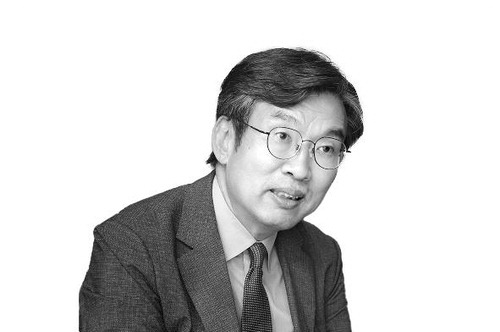
[Seo Jeongin, Director of UN Memorial Park Management, Korean Ambassador to ASEAN]