
 Download


A high-tech battle is being waged in the countryside, pitting investigators against an invasive species of hornet threatening Britain’s native bees.
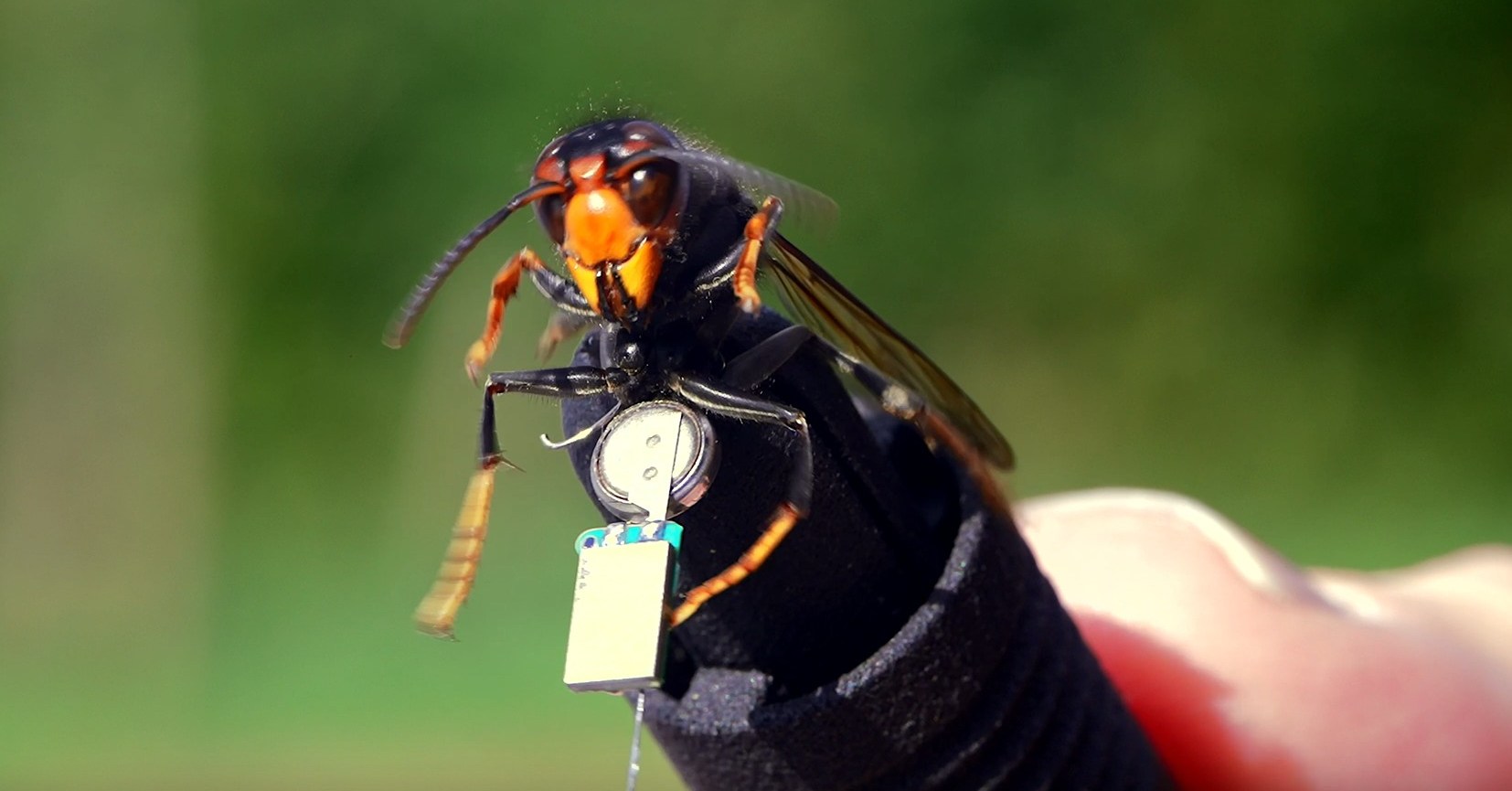
The front line has been the southeast, where the national bee unit has been capturing yellow-legged hornets and fitting them with tiny necklace-like trackers.
Once placed over the insect’s petiole, or “waist”, the transmitters can be tracked by car-mounted and handheld receivers, and even a phone app, to follow them back to their nest. These nests can be high up in trees, and otherwise hard to find.
WOUTER BORRE/ROBOR NATURE
The Dutch-designed transmitters have drastically sped up the unit’s sleuthing, helping it destroy a record 161 nests this year.
However, with a record number of hornets and data revealing the unit’s staffing has stayed largely unchanged despite the growing threat, questions are being raised over how long the line can be held.
There have been 544 credible hornet sightings in 2025, a 666 per cent increase on last year. Numbers last year are believed to have been suppressed by a wet spring. There were just 72 sightings in 2023 and for the six years before that, only about one or two a year.
“It has been a big increase,” said Diane Drinkwater, chairwoman of the British Beekeepers Association. People are getting better at telling the difference between the species, also known as the Asian hornet, and a European hornet that has brown rather than yellow legs.

Anyone who spots the insect is urged to report the sighting via an app
WOUTER BORRE/ROBOR NATURE
Previously the invasion had been largely confined to the southeast, with Dover in Kent a hotspot. Many are simply blown over from France, where the Cambridgeshire beekeeper Andrew Durham said their numbers were “out of control”.
• France wages war on Asian hornets to save beekeepers’ livelihoods
However, this year, nests have been destroyed as far west as Dorset and Hampshire and there has been a greater creep into London. Isolated nests have even been eradicated as far north as near Liverpool and York.
“There’s an increasing level of angst [among beekeepers],” Drinkwater said. “I think many of our members have been concerned by the sightings that are outside the southeast. Sightings in Runcorn and Yorkshire have really concerned people.”
Despite the increased prevalence and widening geographical extent, staffing at the national bee unit has stayed broadly static.
There are at most 59 staff in the unit now, compared with a maximum of 64 four years ago, data from a freedom of information request shows. The number in the hotspot of the southeast have actually fallen, from a high of nine in 2023 to seven now. “I think it’s been very hard on some of the bee inspectors,” Drinkwater said.
A recent study by researchers at the bee unit and Newcastle University suggested efforts to locate and destroy nests would take a decade to be overwhelmed if the public was thorough at reporting the hornets. But without that reporting, they could be overwhelmed in as little as three years.
“You can throw your national bee unit people at it as much as you like. But it will not take much of an increase for them to fall over,” said Durham. He thinks that point could come at between 300 and 400 nests a year.
“It is the early stages of invasion. We are at an absolutely critical phase in our battle against this invasive hornet,” Durham said.
How things unfold next year depends partly on the weather. A mild winter would help undetected hornets survive the season, as genetic testing revealed they did for the first time in 2024.
Professor Nicola Spence, chief plant and bee health officer at Defra, said the government was continuing to pursue an eradication strategy. “Yellow-legged hornets cause significant damage to native pollinators, including our much-loved honeybees,” she said.
Professor Helen Roy, of the UK Centre for Ecology and Hydrology, said: “We still do not have evidence of establishment, but it is important that everyone remains vigilant.” Potential sightings can be submitted via the Asian Hornet Watch app.