
 Download

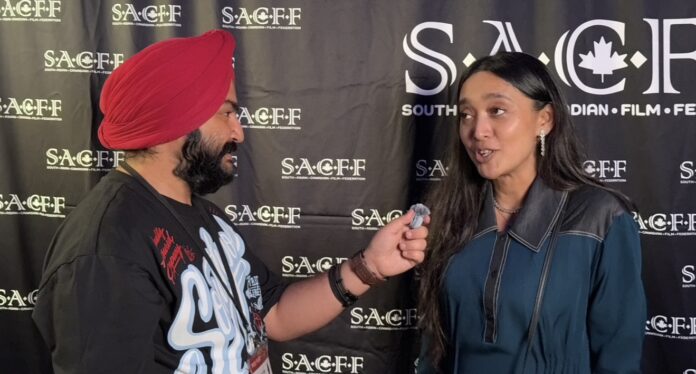

Eight projects from a Canada–India development lab entered TIFF’s industry market seeking the partnerships needed to move their stories from development to the screen.
By Tarun Paul Singh
At the Toronto International Film Festival, the most visible moments often happen on the red carpet. But for eight South Asian-led projects, some of the festival’s most important conversations took place away from the cameras — in pitching sessions, industry roundtables and meetings with potential production and distribution partners.
The South Asian Canadian Film Federation brought eight projects from its Canada–India Co-Production Lab to TIFF: The Market. The participating filmmakers presented their work to producers, distributors, studios, sales agents, financiers and other industry decision-makers.
The projects represented a mix of feature films, documentaries and television series. They included Sayani Gupta’s fantasy-horror feature Tongue; Archita Ghosh’s documentary Tiger Women of Sundarban; Rahul Chaturvedi’s sports drama series Tapaatap; Joe Balass’s drama-comedy Something Delicious; Cyrus Sundar Singh’s family workplace comedy Little India; Priyanka Desai’s documentary Zindabad; Gavin Seal’s supernatural-horror feature Sophia’s Choice; and Teenaa Kaur’s drama-romance Carpool.
The lab was designed to help participating producers move their projects beyond the early stages of development. Its programming covered international co-production, financing, intellectual property, pitching and navigating the international film market.
Participants also joined curated roundtable discussions at the Telefilm Pavilion. These meetings gave them an opportunity to receive industry feedback, discuss potential partnerships and build relationships with Canadian and international screen professionals.
For immigrant and diaspora filmmakers building careers in Canada, developing a strong story is only one part of the process. They may also have to navigate an unfamiliar funding system, rebuild professional networks and gain access to broadcasters, producers and distributors who can help move a project forward.
The Canada–India focus of the lab reflects the cross-border nature of many diaspora stories. A project may be inspired by experiences in India, developed by creators living in Canada and intended for audiences in several countries. International co-production can potentially provide access to talent, locations, financing and distribution across more than one market.
Alongside the industry program, the SACFF Social at TIFF brought together South Asian Canadian directors, producers, writers, performers and other screen professionals. The gathering celebrated the community’s growing presence in Canadian film and television while creating space for filmmakers to exchange ideas and make professional connections.
But representation at a major festival can increase visibility without necessarily leading to a completed film or television project. The longer-term measure of the initiative will be whether conversations held during TIFF lead to follow-up meetings, production partners, financing commitments or distribution opportunities.
For South Asian immigrant and diaspora creators, the initiative points to a broader question facing Canada’s screen industry: how can diverse voices move beyond being invited into cultural spaces and gain meaningful access to the resources and decision-making structures that determine which stories ultimately get produced?
The accompanying video explores the opportunities being created through the Canada–India Co-Production Lab and what filmmakers hope will come from presenting their projects to the international industry at TIFF.