
 Download

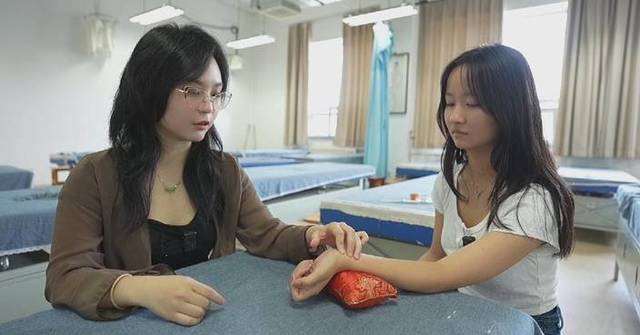

A group of aspiring young American students have their finger on the pulse and are looking to tap into the ancient knowledge of traditional Chinese medicine (TCM) with the hope of becoming practitioners themselves one day.
It comes amid a growing fascination among the younger generations about Chinese lifestyle habits and customs, sparked by the “becoming Chinese” viral internet meme popularized by an online influencer. The trend has taken social media by storm, with international TikTok users increasingly posting videos under the same theme, showcasing their “Chinese-style” lives.
Now, a group of young Americans are taking the trend one step further as they flew across the Pacific to build their futures around Chinese culture and look to learn the art of the Chinese medical system.
For those taking part in these classes in Beijing, their curiosity has been sparked in a multitude of different ways, but they have all come with the same goal as they look to deepen their studies into the science and age-old practices which lie behind TCM.
“When I was in my undergraduate campus time, I learned about a traditional Chinese medicine herb called ‘Ma Huang’ — that’s what made me spark about it because usually we would take, as I stated before, chemicals and put it together to treat patients. But when I learned about Ma Huang, I was like where does this plant come from? What is the background from it? And that plant introduced me to traditional Chinese medicine,” said Aquintis Terrell Williams, one of the students.
Angelika Chen said he developed a connection to Chinese medicine based on her own experience as a patient when she was young.
“When I was little, like around 12 or so, I got injured. I sought out help from a lot of western medicine doctors and none of them were able to completely heal my body. Then my mom reached out to a Chinese medicine doctor that she knew, and they helped me a lot to get back to a normal state,” she said.
“I used to study psychology as my major back in the states and during that time, it was during COVID. I’ve heard like there are certain kind of treatment methods here in China through TCM that was able to help with COVID and I thought it was like pretty interesting,” said Nancy Huang, another student.
The young U.S. learners are covering everything from basic theory, to the core methods such as tongue diagnosis, to how different herbs work together in a formula. In their hands-on practice, they learn how to feel the pulse, locate acupoints, and insert acupuncture needles at the correct depth and angle.
For them, mastering these essential skills of traditional Chinese medicine is not just a tourist experience but part of building a deeper connection with Chinese culture which can ultimately reshape their future careers.
“After university, I hope to get my license here and then probably go back to the U.S. and have my own clinic there. But I’m also open to any opportunities,” said Chen.
“I could go back to the States because like, I grew up there and I could work there, open a clinic, but I’m open to anything,” said Huang.
“I hopefully try to become a traditional Chinese medicine doctor in China. My goal is to try to work at an international traditional medicine hospital,” said Williams.
The increasing awareness and acceptance of TCM, as well as the wider fascination with China following the online frenzy is also reflected in public opinion data.
A recent Pew Research Center survey, released in April this year, shows that 27 percent of Americans now hold a favorable view of China — nearly twice the share recorded back in 2023. The generational gap is clear: roughly one-third of adults under 50 express a favorable view of China, compared with just 19 percent among older adults.
Young American students look to build future careers around traditional Chinese medicine
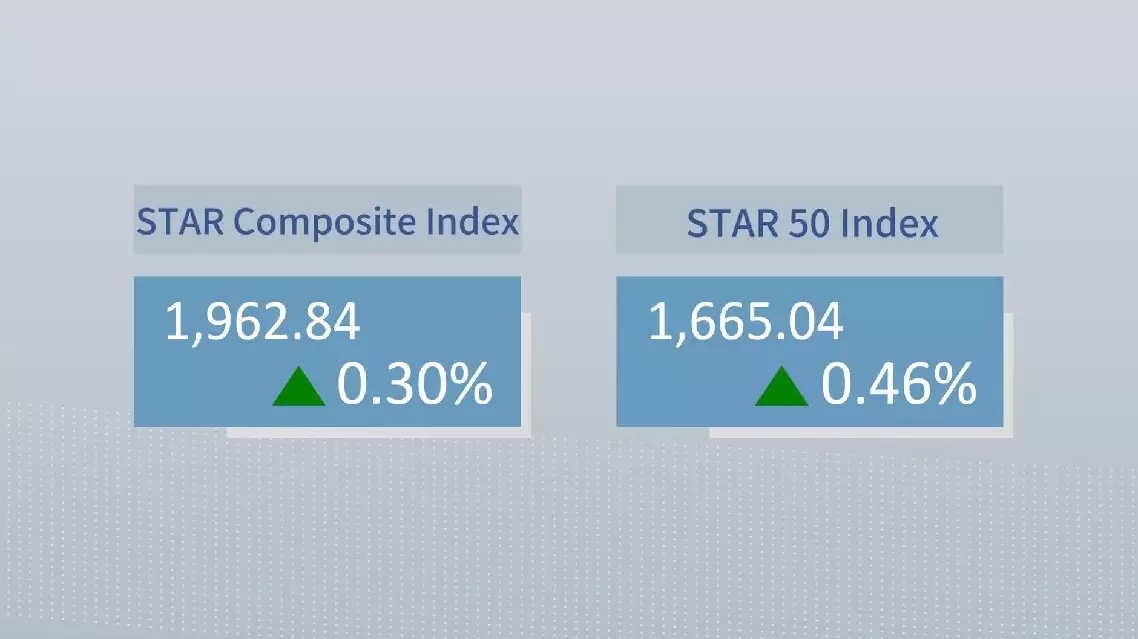
The STAR Composite Index, which reflects the performance of stocks on China’s sci-tech innovation board, closed 0.3 percent higher at 1,962.84 points on Tuesday.
The STAR 50 Index, which tracks the 50 largest stocks listed on the board that also meet certain liquidity requirements, closed 0.46 percent higher at 1,665.04 points.
The sci-tech innovation board, commonly known as the STAR Market, was inaugurated in June 2019 at Shanghai Stock Exchange. It is designed to support companies in the high-tech and strategic emerging sectors.
China’s STAR Composite Index closes higher Tuesday