
 Download

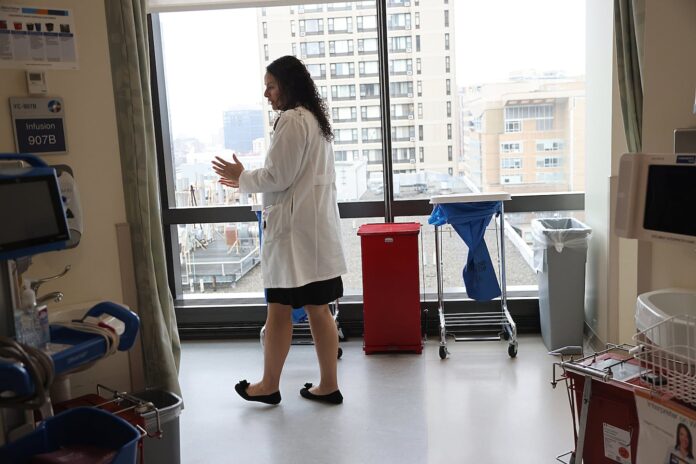

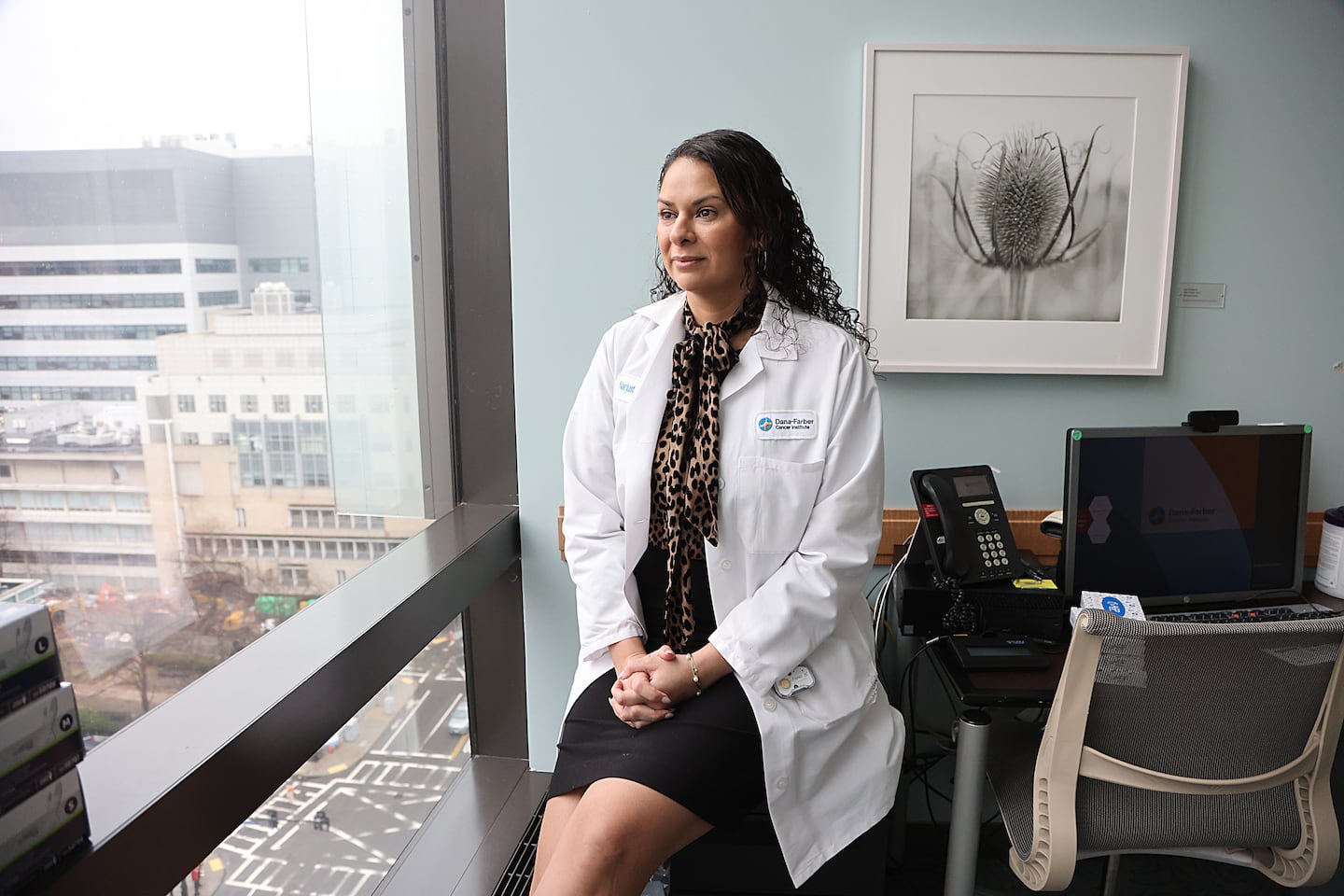
“Mothers are being taken away by this disease, and no one is talking about it,” said Dr. Narjust Florez, an oncologist at Dana-Farber Cancer Institute who specializes in lung cancer in women.
About 50 percent of all Asian American women diagnosed with lung cancer never smoked, and those percentages climb to about 80 among Chinese American and 86 among Indian American women. Hispanic women are also at increased risk, with about 40 percent of lung cancer cases occurring in never-smokers, compared to about 20 percent for white women and 14 percent for Black women.
Bettina Ko, a 68-year-old woman from Northborough, found her cancer by accident. For months, she had trouble seeing out of her left eye, a symptom of an autoimmune disease that can also affect the thymus gland in the chest. She got a chest CT scan to check her thymus, but instead found a little white cloud in her lung.
She had never smoked and had no lingering cough or pain, no family history of lung cancer, no reason to believe the nodule would be anything but benign. Another scan said otherwise.
It wasn’t until Ko, whose family is from Taiwan, began treatment that she did the mental math. She was the fourth woman in her friend group — all of Asian descent, all nonsmokers — to be diagnosed with lung cancer. Two of her friends died from the disease. She was stunned when her doctor told her that nonsmoking Asian American women in particular have an elevated risk of lung cancer.
“I have been getting mammograms and colonoscopies, but nothing, at least that I’m aware of, for [lung] cancer screening,” Ko said. “If we know that we are the population with a very high percentage [of lung cancer], maybe that would be something worthwhile to check, right?”
There are a number of theories as to why some people develop lung cancer despite never smoking cigarettes. Some research indicates that inhaling cooking oil vapors, especially without proper ventilation, can increase the risk of lung cancer. Exposure to poor air quality and certain jobs, such as mining and truck driving, are also associated with the disease.
Doctors aren’t sure why Asian and Hispanic women who have never smoked develop lung cancer at higher rates compared to other populations. It could be a genetic variation that hasn’t been identified yet, said Dr. Sucharita Kher, a Tufts Medicine pulmonologist who also runs the Tufts Asian Lung Clinic.
When these women do develop lung cancer, they are more likely to have a mutation known as EGFR, which doesn’t cause the cancer, but does mean certain treatments are more effective than others, Kher said.
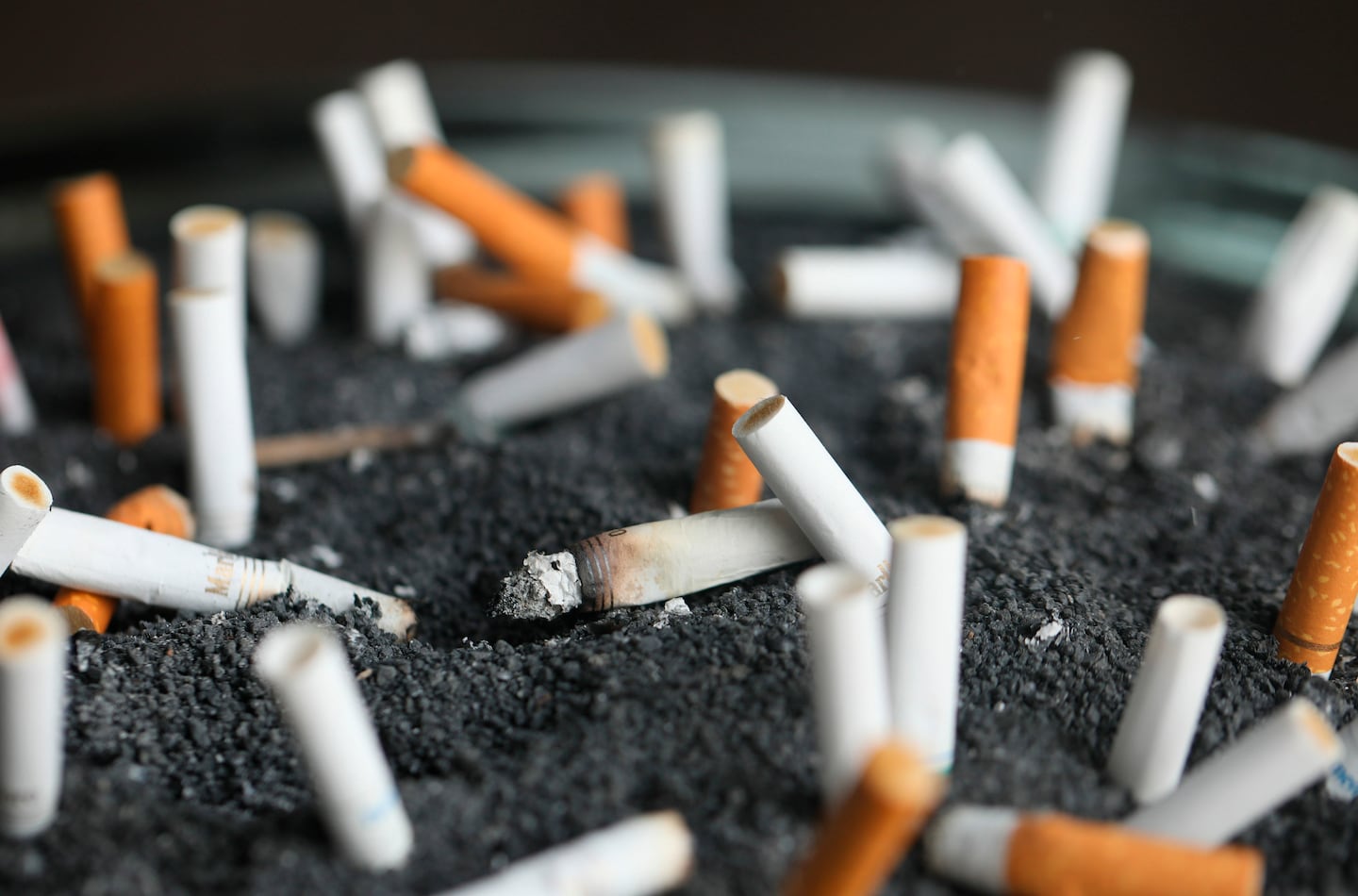
To qualify for annual low-dose CT scans, the gold standard for lung cancer screening, you must be between the ages of 50 and 80 and either currently smoke or have quit in the last 15 years. And you have to have smoked the equivalent of about a pack of cigarettes a day for 20 years, or else insurance won’t cover your screening. Scans can cost up to $400 out of pocket.
The eligibility criteria were slightly expanded in 2021, increasing the number of women and Black smokers who now qualify for testing.
The screening guidelines were developed in 2013 after a National Lung Screening Trial of more than 50,000 people showed that low-dose CT scans caught cancers in just over 1 percent of high-risk smokers, and reduced risk of cancer death by up to 20 percent when compared to standard chest X-rays.
A similar large-scale study on certain nonsmoking populations would likely be needed to justify the additional costs and risks of radiation exposure that would come with expanding screening guidelines, said Dr. Ruchi Hamal, an oncologist and hematologist at Lowell General Hospital Cancer Center.
Making matters worse, the US Preventive Services Task Force, the group of experts charged with issuing recommendations on health screenings, hasn’t met in over a year amid the overhaul of US Department of Health and Human Services under Secretary Robert F. Kennedy Jr. Any potential discussions about lung cancer screening would have to wait until the group resumes its normal duties.
The US Preventive Services Task Force did not respond to requests for comment for this story.
There are some smaller studies evaluating the efficacy of screening in high-risk nonsmoking groups.
Dr. Elaine Shum, an oncologist who treats lung cancer at NYU Langone Health, is leading a study evaluating whether CT scans are as effective at detecting early lung cancer in nonsmoking Asian women as they are in heavy smokers. It only includes 1,000 people and is not randomized. But the results are promising: Scans detected cancer in 1.3 percent of participants, higher than the detection rate seen in high-risk smokers.
Replicating the National Lung Screening Trial would be expensive, time-consuming, and likely impossible because of massive cuts to federal research funding, Shum said. But potential new screening tools being investigated, such as blood tests, could change the research landscape.
In 2022, Taiwan launched an enhanced lung cancer screening program for nonsmoking patients with a family history of lung cancer. It has seen early success. About 85 percent of lung cancer cases found as part of the advanced screenings were detected at stage 0 or stage 1, making them much easier to treat successfully.
One of Ko’s friends found her lung cancer during a screening she had done in China in 2017. The friend, Lynn, who now lives in Seattle and asked to be identified only by her first name, regularly travels to China where she can select different preventive health tests from a self-pay menu that are cheaper than they would be in the US. The CT scan showed a small nodule, which Lynn and her doctors in the US and China then watched for years until it began to grow. Because she caught it early, Lynn was able to be cured of her cancer with only surgery.
There are downsides to unregulated screenings. Low-dose CT scans emit small amounts of radiation, which can contribute to the development of cancer in rare cases. They can also detect nodules that would have otherwise gone away on their own, leading to unnecessary biopsies and increased health anxiety.
Getting smokers to screen is already a difficult task. Only 15 percent of Massachusetts residents who qualify for annual lung cancer checks partake. The rates are lower for women than men, especially women of color. They’re also in stark contrast to other common cancer screenings. For example, about 64 percent of Massachusetts women in their 40s received mammograms, which screen for breast cancer, in 2022.
Medical centers across Massachusetts are trying to get more smokers to get annual scans. Kher at Tufts Medicine said the Asian Lung Clinic is set up to increase access to diagnosis and treatment of lung conditions that are common in patients of Asian descent. Kher hosted an inaugural outreach event in Chinatown last summer, in partnership with the American Lung Association, to encourage residents who qualify for preventive lung cancer testing to get screened.
Increasing uptake of screening among heavy smokers could open the door for changing future guidelines to be more inclusive of other at-risk groups, said Dana-Farber’s Florez.
“The screening is there, but we’re not using it. And because we’re not using it, I think that may be one of the reasons” that guidelines haven’t expanded to include more people who are at heightened risk, Florez said.
Shame is a major barrier. Lung cancer is so heavily associated with smoking that it’s often seen as a moral failing, a preventable disease spurred by unhealthy habits.
Early in her career, Florez said, she treated a nonsmoking young woman with lung cancer that wasn’t detected until it had spread throughout her body. She died without telling anyone, except for her boyfriend and sister, that the disease originated in her lungs. Her obituary said she died of breast cancer.
Even Florez, who has spent her career trying to increase access to lung cancer resources for women, was shocked when her own mother, who had never smoked, was diagnosed with the disease in 2022. Florez’s mother has stage 4 cancer, meaning it spread to other parts of her body and is incurable.
Florez now has a family history of lung cancer. She cannot get screened unless she pays for the test out of pocket.
“It doesn’t matter if you are the mother of a lung cancer doctor. It doesn’t matter if you’re a lung cancer doctor,” Florez said. “There is no discrimination for this cancer.”
Marin Wolf can be reached at marin.wolf@globe.com.