 Download

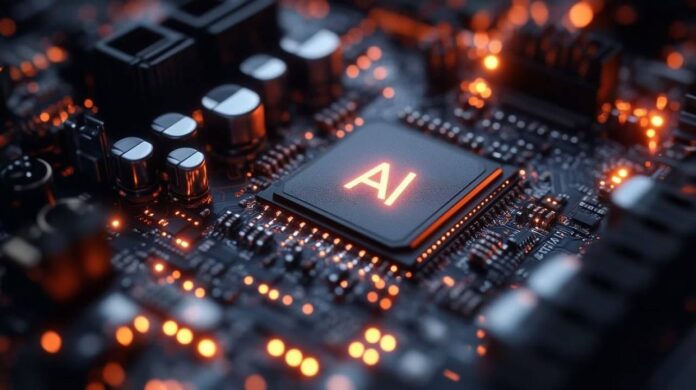

Long-standing technological competitors Taiwan and South Korea are joining forces to address the booming global demand for AI accelerators, the specialized hardware critical for training generative AI models. This alliance marks a significant shift from decades of intense rivalry to a necessary partnership in the digital age.
The insatiable demand from tech giants for computing power has strained the capacity of key accelerator suppliers like Nvidia and AMD. Their products rely on an increasingly interconnected supply chain linking Taiwan and South Korea, making cooperation essential to meet the massive market need.
Nvidia CEO Jensen Huang highlighted the urgency at Computex 2026 in Taipei, personally requesting more memory wafers from South Korean firm SK Hynix. This collaboration underscores that no single country can satisfy the current scale of AI infrastructure expansion alone.
From Intense Competition to Interdependence
For decades, South Korea and Taiwan fiercely competed for supremacy in technologies ranging from televisions and smartphones to memory chips. Both nations, former Japanese colonies, built their economies on exports, initially focusing on labor-intensive goods before advancing to electronics. This rivalry saw Taiwanese brands like Acer and Asus compete against South Korean giants Samsung and LG.
South Korea often pulled ahead due to the integrated structure of its conglomerates, such as Samsung, which controlled multiple stages of the supply chain. A notable example involved Samsung reportedly aiming to dominate industries where Taiwanese firms competed, though Samsung denied such a specific ‘Kill Taiwan’ strategy.
Taiwan’s strength, however, lay in its highly specialized contract manufacturing ecosystem. Unlike South Korea’s vertically integrated companies, Taiwan developed a dense network of firms each focusing on a narrow part of the manufacturing process. This specialization allowed for greater flexibility and adaptability, enabling enduring partnerships with global tech firms like Apple, which eventually made Taiwan Semiconductor Manufacturing Company (TSMC) its primary chip supplier over Samsung.
Taiwan’s AI Hardware Dominance and Future Outlook
In the current AI era, Taiwan’s multifaceted ecosystem has proven highly advantageous. Taiwanese companies now hold dominant positions in crucial niches, from power supplies to chip packaging and advanced cooling systems. This allows global customers to select and combine suppliers, maintaining production flexibility. Nomura’s May report ranked Taiwan first globally in AI hardware production, with its AI-related exports contributing to a 15-year high economic growth of 8.7% last year.
This economic divergence saw Taiwan surpass South Korea in GDP per capita in 2025 for the first time in over two decades. However, this has not deepened the rivalry; instead, the AI boom has fostered greater interdependence. South Korea excels in High Bandwidth Memory (HBM), with SK Hynix and Samsung together accounting for approximately 80% of global HBM production. These critical memory components are then integrated with computing chips from Taiwan’s TSMC using advanced packaging techniques, a final step in creating AI accelerators.
This dynamic has resulted in South Korea achieving a record trade surplus with Taiwan last year. The relationship is best described as a ‘frenemy’ dynamic, driven by the sheer scale of AI demand. Despite lingering competitive sentiments, the complementary strengths of Taiwan’s contract chipmaking dominance and South Korea’s memory market stronghold make them indispensable partners in powering the next wave of artificial intelligence.