
 Download

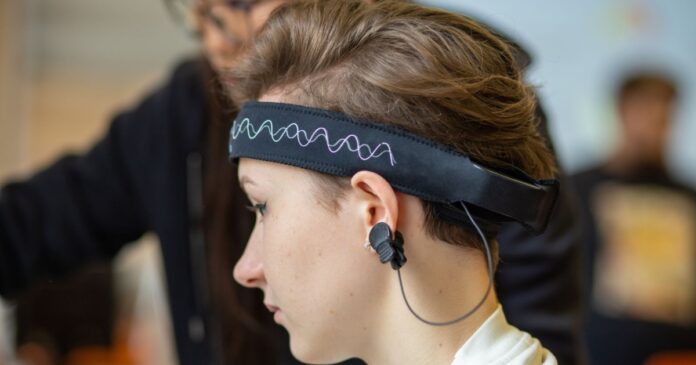

BCI funding topped $1b across 64 deals in the first half.
China is moving brain-computer interface (BCI) technology from research toward commercial medical use as government support, investment, regulatory approvals, and insurance coverage expand.
“This policy support is reinforced by a strong domestic ecosystem, including a large base of leading neurosurgery and surgical hospitals, a sizeable patient population, and collaboration amongst hospitals, universities, research institutes, and manufacturers,” Grace Wang, a partner at L.E.K. Consulting LLC, said via Zoom.
She said the sector has recorded more than 20 funding events annually since 2021, reflecting growing investor interest in BCI technology.
“The BCI sector attracted more than $1.06b in investment across 64 deals in the first half of 2026 alone, surpassing the entire previous year’s total,” William Rojas, director of tech research and strategic intelligence at GlobalData Plc, said in an emailed reply to questions.
Brain-computer interface was included among 10 emerging industries targeted for development under China’s 15th five-year plan, Wang pointed out.
Regulatory and payment systems have also started to support commercialisation. China’s National Medical Products Administration issued guidelines on the classification and naming of BCI medical devices in the first half, helping companies seek product approvals, Rojas said.
China’s National Healthcare Security Administration introduced pricing items for invasive BCI procedures as early as 2025. Regions including Zhejiang and Beijing began including BCI-related services in their medical insurance coverage in 2026, he added.
“Local areas like Beijing and Zhejiang now help pay for brain chip procedures using public health insurance,” he said.
Noninvasive BCI products are already commercially available for consumer-health uses such as sleep monitoring, communication, and attention training, Wang said.
Semi-invasive BCI technology for restoring motor function is also becoming more mature. Neuracle Technology (Shanghai) Co. Ltd., a BCI founded in 2011, developed a hand-function restoration device that became the first globally approved semi-invasive BCI product in 2026, Wang said.
Invasive BCI technology will take longer to reach broader use because companies still need to establish clinical evidence and demonstrate safety, she said.
Rehabilitation is likely to generate significant business value over the next two to three years because of its large patient population and the relative maturity of noninvasive BCI technology, Wang said.
Components such as electrodes, neural signal chips, and software could also create opportunities as companies work to generate clinical evidence for BCI products, she said.
Several challenges remain, including the need for consistent clinical evidence across bigger patient groups, long-term safety data for semi-invasive and invasive devices, and longer-lasting electrodes.
Wang also said limited short-term national reimbursement coverage could constrain affordability.
Rojas said ethical and safety issues would remain areas that need to be addressed even as regulatory and payment barriers ease.