
 Download

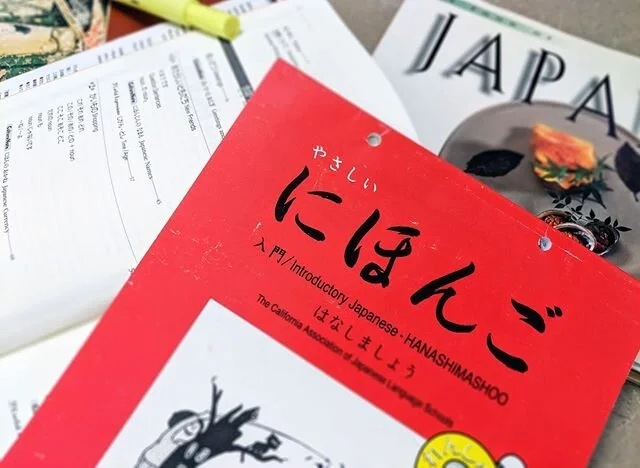

I signed up for Japanese during my sophomore year at Garfield High School. I slept through class more often than I’d care to admit. It was only once I started taking Japanese at the University of Washington that I began to take the language seriously. My instructor was Japanese, and he ran nearly every class entirely in Japanese. Suddenly, Japanese was no longer something locked inside a textbook. It felt alive.
As a Chinese American, learning Japanese forced me to grapple with something far more complicated than grammar and vocabulary: the long, often painful shared history between China and Japan.
War left a collective scar across generations of Chinese families. For many Chinese people whose parents or grandparents lived through invasion and occupation, Japan could be a sensitive subject. My generation inherited a different relationship. We grew up surrounded by Japanese culture, rarely stopping to ask where it came from. Chinese kids watched Doraemon and Crayon Shin-chan. Japanese games, anime and pop culture crossed borders, even when historical memories remained divided.
Some of modern China’s most important revolutionaries and intellectuals spent formative years in Japan. Lu Xun studied there. Chiang Kai-shek received military training there. Sun Yat-sen found allies among Japanese sympathizers, including Tōten Miyazaki, who backed China’s revolutionary movement.
Cultural exchange stretches back much further.
Japan had a spoken language long before it developed its own established writing system. Chinese characters would eventually become the foundation of kanji. Traditional accounts tell of Wani, a scholar tied to the Korean kingdom of Baekje, who brought Chinese texts — including the Analects — to the Japanese imperial court.
Centuries of that contact are visible every time a student opens a Japanese textbook.
Kanji has two main reading types: on’yomi and kun’yomi. I came up with a simple trick to tell them apart. On’yomi, I told myself, cannot stand on its “own.” It generally reflects historically borrowed Chinese pronunciations and appears most often in compound words. Kun’yomi, by contrast, are native Japanese readings.
Take 山,the character for mountain.
In Mandarin, it is shān. In Japanese, one on’yomi is san, as in 富士山 (Fuji-san), Mount Fuji. Its native Japanese reading is yama.
As someone who already knew Chinese, this sometimes felt like cheating.
While other students stared at unfamiliar characters and built meaning from scratch, I could often glance at a kanji and grasp its core meaning right away. I do not recall ever failing a kanji test.
Yet the most vital lessons Japanese taught me had nothing to do with kanji.
At a certain point, I began to feel I owed Japan something. “Owed” may not be the right word. Perhaps it was a quiet sense of responsibility.
After spending years immersed in the language, speaking with native speakers and building friendships with Japanese people, I started reflecting on the two worlds I belong to: Chinese and American. I wondered whether learning another language might help bridge the distance between them.
Some of that thinking came from my friend Briton. He lived nine years in Guiyang, just blocks from my family’s home in China, and traveled to rural villages doing Christian outreach among Miao communities. Oddly enough, I first met him at a doughnut stand during a church gathering in Seattle.
He once told me he felt he owed something to the Chinese people, and that his faith and missionary work were how he tried to repay that debt.
His words stuck with me.
Japanese culture has a well-known distinction: 本音 (honne) (true sound) and 建前 (tatemae) (facade).
My Japanese teacher at the UW, Miyamoto-sensei, explained it by drawing two circles. A small circle sat at the center, wrapped inside a much larger outer circle.
The inner circle was honne: a person’s genuine feelings and private desires. The outer circle was tatemae: the public face we present to society.
As I grew closer to Japanese friends, I sometimes felt I was invited past that outer circle. People shared things they would not readily tell strangers — their worries, frustrations, quiet private thoughts.
Of course, honne and tatemae describe a universal dynamic, not something unique to Japan. Every society has unwritten rules about what we reveal and what we hold back. Every person carries both a public self and a private one.
I once talked with an American friend who visited Japan. He was struck by how few people smiled during daily commutes. Everyone seemed focused on getting to work, and he read their expressions as cold or unfeeling.
But the more Japanese people I came to know, the less convincing that stereotype became.
When I interned at the International Examiner in high school, one Japanese colleague wrote an essay arguing Japanese society was closed-off. He, too, wrote that Japanese people were less outwardly expressive than Westerners.
I have still never been to Japan.
That is an important limitation to name upfront. Nearly everything I know comes from classrooms, language study and the Japanese people I have met — not from living within the country itself.
But those personal relationships taught me things travel brochures and history textbooks never could.
The Japanese friends I made are funny, vulnerable, opinionated and deeply warm. After our conversations, they would often send polite messages thanking me for talking with them. What from afar looks like emotional reserve can feel completely different once you actually know the person.
That may be the greatest lesson Japanese has given me.
Learning a language is not merely learning how another nation speaks. It is learning how its people think, how they relate to each other, and how history shapes their worldview.
Somewhere along the way, I started questioning assumptions I had inherited about people I had never truly known.
We usually encounter other cultures through their tatemae — the surface visible to outsiders. Language gives us a chance to look beneath it.
And if we are willing to keep looking, what we find underneath may be far less foreign than we expected. To keep searching, why don’t we all listen for the “true sound” instead of only judging the facade?