
 Download

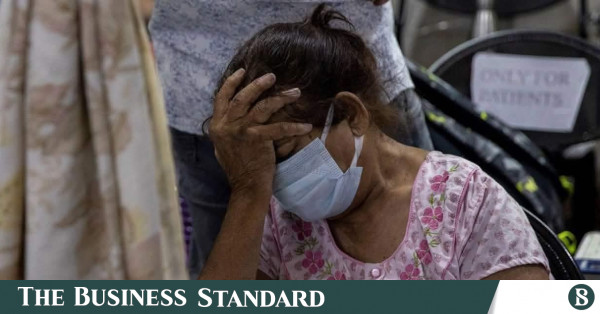

Known as “Mrs Bibi syndrome” or “Mrs Begum syndrome”, the term is not exactly a recognised medical diagnosis. It takes the common South Asian names Bibi and Begum and turns them into a stereotype of a woman whose reports of pain or illness are considered exaggerated or unreliable.
The term has also been documented in historical research on healthcare in Britain. A recent study published in the Journal of British Studies described “Mrs Bibi, or Mrs Begum Syndrome” as a derogatory label used by physicians to characterise South Asian women as overly dramatic or untruthful.
For some women, advocates say, the consequences of being dismissed can be serious.
According to Leicester Gazette, in 1997, a South Asian woman named Anika was recovering from gallbladder surgery at Leicester’s Glenfield Hospital when she began experiencing severe symptoms.
Her daughter Layla said her mother repeatedly told staff that something was wrong. She was shivering and frightened, but was allegedly told that she was anxious or imagining the problem.
Despite being able to communicate in English, Anika was not taken seriously until her sister, a medical professional, intervened.
It was then discovered that her bowel had been perforated during the operation. The complication led to septic shock, emergency surgery, intensive care and lifelong disability, according to Layla.
“It took another medical professional to intervene for my Mum to get that attention that she needed,” Layla said.
“God forbid if that hadn’t happened. I think that maybe my Mum wouldn’t be here today.”
A history of women being dismissed
Dr Sarah Ali, a trustee of the South Asian Health Foundation (SAHF), linked the issue to the longer history of women’s symptoms being dismissed in medicine.
“Historically, doctors have been men, and they’ve focused mainly on male health,” she said.
Women’s health was often attributed to “hysteria”, she said, with pain and other symptoms dismissed rather than investigated.
“We’ve been dismissed as a gender, which I suppose leads into ‘Mrs Bibi/Begum syndrome’ as women’s health being dismissed,” she said.
The problem is difficult to quantify because there is little research specifically examining the so-called syndrome. Much of the available evidence comes from personal experiences and accounts from healthcare workers and advocates.
The term itself is also contested and should not be confused with a recognised medical condition.
Cultural taboos can make health conversations harder
Layla said health problems can sometimes remain private within South Asian families, making it harder for women to discuss symptoms or seek help.
“We don’t generally openly talk about health issues within the culture or within our own communities,” she said.
Dr Ali pointed to menstrual and reproductive health as an example. In some South Asian communities, she said, menstruation can be treated as a taboo subject, making it difficult for women to discuss their health.
Recent research also suggests that menopause remains a sensitive subject for some British South Asian women. A 2026 qualitative study found that reproductive and sexual health topics can remain highly private or stigmatised in some South Asian communities, contributing to limited discussion and menopause awareness.
These cultural barriers can intersect with problems within the healthcare system, potentially making it harder for women to recognise symptoms, seek treatment or advocate for themselves.
Breast cancer highlights wider inequalities
Breast cancer is another area where advocates have highlighted gaps in awareness, screening and outcomes.
Breast Cancer Now says South Asian women in England aged 18-71 are less likely than white women to have breast cancer diagnosed early in NHS data covering 2019/20 to 2022/23. South Asian women are also more likely to be diagnosed with secondary breast cancer, according to the charity.
Researchers at Queen Mary University of London, led by Professor Claude Chelala in 2025, also found differences in breast cancer outcomes among women of South Asian ancestry. Researchers analysed clinical and genetic data from more than 7,000 women and found that South Asian women were diagnosed nearly seven years earlier and died around 13 years younger than women of European ancestry.
Breast cancer outcomes vary across populations and over time. Earlier studies have produced different findings, including research that found higher breast cancer survival among South Asian women diagnosed in England and Wales during earlier periods.
Dr Ali has personal experience of the difficulties surrounding breast cancer.
She said her mother supported her throughout her treatment but asked her not to tell members of their community.
“I have 60 first cousins. None of them know. None of the friends that I grew up with know to this day,” she said.
She said the decision was influenced by concerns about what others might say.
“As second generation, you’re straddling two cultures,” she said. “You’re still straddling your parents’ culture and have to have respect for them.”
Maternity care also exposes gaps
Maternity care is another area where ethnic disparities in the UK have been documented.
The MBRRACE-UK maternal mortality report for 2020-22 found an almost two-fold difference in maternal mortality rates among women from Asian ethnic backgrounds compared with white women.
A report by the South Asian Health Foundation, drawing on MBRRACE-UK data, cited maternal mortality rates of 17.6 per 100,000 maternities among Asian women compared with 9.7 among white women for the relevant period.
The Muslim Women’s Network has also raised concerns about the quality of ethnicity data in maternity records. It has called for ethnicity to be recorded accurately down to specific sub-ethnic groups and for healthcare providers to use disaggregated data when planning services.
Advocates say this is important because broad ethnic categories can conceal differences between communities.
In Leicester, organisations including Leicester Mammas and the Leicester, Leicestershire and Rutland Maternity and Neonatal Voices Partnership work with local services to improve maternity and neonatal care.
Nafeesah Tulta, a breastfeeding peer supporter at Leicester Mammas and co-lead for the partnership, said listening to women’s experiences was essential.
“We know how important it is that we offer opportunities for parents to tell us their stories and feel heard,” she said.
Building trust through better communication
Layla said healthcare professionals should engage directly with South Asian communities and explain health information in accessible language.
“Tell them, simplify things, and talk about how things affect the body. Make it simple,” she said.
She also urged women to talk openly about symptoms and positive experiences with healthcare.
“We need to celebrate those positive outcomes, because that gives people confidence,” she said.
Dr Ali said better awareness could encourage women to seek screening and medical advice earlier.
“If we talk about it, we learn more. We can prevent things by going to screening, for cancer, for cervical cancer, breast cancer and by talking to the doctors about things,” she said.
She also called for greater cultural competence among healthcare professionals and more inclusive medical research.
“Most research under-represents ethnic minority groups,” she said, adding that better representation could help researchers understand how conditions and treatments affect different populations.
“Once we’ve got the research, we can tailor individualised guidelines for different ethnicities,” she said. “But there’s still unconscious bias, there’s still going to be racism. There’s still a lot of work to be done.”
The challenge therefore also involves ensuring that healthcare professionals listen when they do.
As Dr Ali put it, the principle behind the NHS should be that illness is not something for which people should be punished or blamed, but a condition whose costs and care should be shared by society.
“For me, that should be what the future of the NHS should look like. Regardless of who you are, we should all be given the same excellent healthcare.”